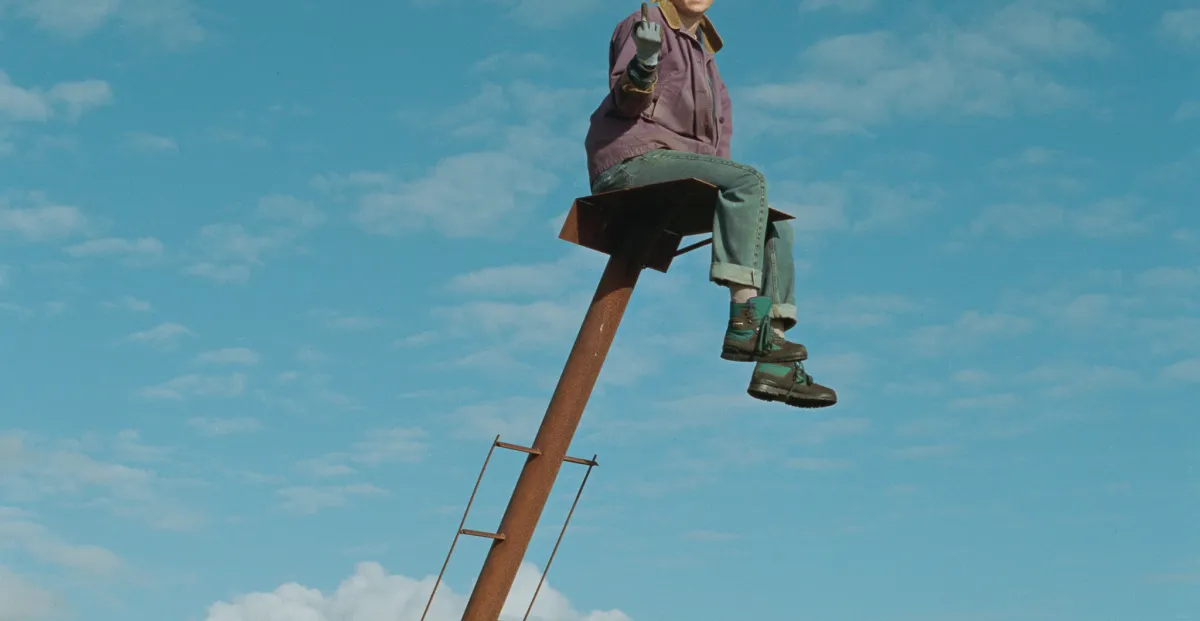
Anna and Magnus created a life filled with love. They had a home, three kids, and a dog. But then they separated. This is where The Love That Remains begins. As time goes on and the reality of their divorce sinks in, they grapple with navigating a future challenged by their unraveling relationship.
Icelandic director Hlynur Pálmason’s latest film shares the stunning visual style of his earlier works, Godland and A White, White Day. While the themes are serious, the overall tone here feels lighter. The dog, Panda, even won the Palm Dog Award at Cannes this year—yes, that’s a real award. On the surface, The Love That Remains explores everyday struggles and emotions, like co-parenting during a divorce, and an unexpected moment when one of their kids—played by Pálmason’s own children—accidentally shoots the other with a bow and arrow (he’s okay, but he might need a new sweater).
Beneath the surface, the film tackles deeper existential questions. “I often think about the meaning of all this,” Pálmason shares. “When you go through life, you have moments of doubt about what it all means.” He admits it can feel a bit silly. Yet, it’s also life. As we journey through the seasons with Anna and Magnus, we begin to understand what remains of their love.
The director spoke with The Verge about directing his kids and managing the simultaneous filming of Godland and The Love That Remains.
The Verge: Let’s start with this—Godland had a heavy narrative while The Love That Remains feels lighter. Do they feel similar or different to you?
Hlynur Pálmason: Godland was a period film, which inherently comes with a weight because you have to create everything from scratch. I wanted something with a different energy—more playful and spontaneous, shot with a smaller budget and crew. Though Godland was already small, The Love That Remains was even smaller.
After moving back to Iceland, I was always trying to find a way to stretch time to give each project more attention. It’s challenging financially, but we figured out a method to work on multiple projects in parallel. We develop, write, and shoot various ideas, and when they feel right, we choose which project to pursue. The Love That Remains has been in progress for quite a while; in fact, we shot the first image back in 2017.
It’s quite a lengthy process. Sometimes, while filming scenes for Godland, I would be shooting a scene for The Love That Remains the same week. It’s wild to think about.
The Verge: So you keep track of all these different threads?
Hlynur Pálmason: Yeah, it kind of… flows together. Some people might find it negative when projects start overlapping, but I actually enjoy it. It can shake things up and push you to think critically about your projects. If one project is turning out interesting, it can inspire the other or drive it to improve.
I couldn’t work on just one film at a time because it wouldn’t be financially feasible. I’d only make a handful of films in my lifetime, and I’d need to engage in other work, like teaching.
The Verge: The title The Love That Remains seems to raise a question: what love endures? Did making this film help you answer that?
Hlynur Pálmason: I often reflect on what it all means. After years in a relationship, if separation occurs and my partner finds someone new, what does that signify? It feels almost absurd. Yet there’s a beautiful side too: how precious time is and who you choose to spend it with. Time moves quickly, and we need to seize moments with those we love. This theme is prevalent in both Godland and The Love That Remains, emphasizing the significance of time and its passage.
The Verge: The opening sequence is beautifully done, introducing the family through a portrait at the table. It feels almost sitcom-like, yet the music contrasts with that.
Hlynur Pálmason: Absolutely. After filming the image of the roof being ripped off the old studio, I envisioned the film’s progression. Often, I discover my film’s direction after capturing an image or sound. It stimulates my next steps. When I filmed that roof scene, I realized the opening should showcase each family member and start with warmth before things unravel. I know what I don’t want the film to be, but it’s sometimes harder to pinpoint what I do want.
The Verge: It combines fun, playfulness, and sincerity.
Hlynur Pálmason: Yes, but where does it veer into sentimentality? That’s a tricky balance. I appreciate sentiment in David Lynch’s work, but I prefer a different approach.
The Verge: You’re working with your own children in this film. What’s that experience like?
Hlynur Pálmason: It’s enjoyable. I have a lot of kids, and they’ve been in all my projects aside from my first short films. Collaborating with them feels natural, and I don’t force them to participate. I do pay them, but they genuinely enjoy being part of this creative family—we’re all close friends, working together.
The Verge: Balancing your role as director while making decisions with your kids around must add a unique dynamic.
Hlynur Pálmason: It can be chaotic, but the key is that we have enough time. I’m never pressured by an assistant director urging us to hurry. We take as much time as we need to capture something meaningful. My sets tend to be calm and straightforward—no catering, no hierarchy, no fancy setups. Just a basic, relaxed atmosphere.
The Love That Remains is currently in select theaters.