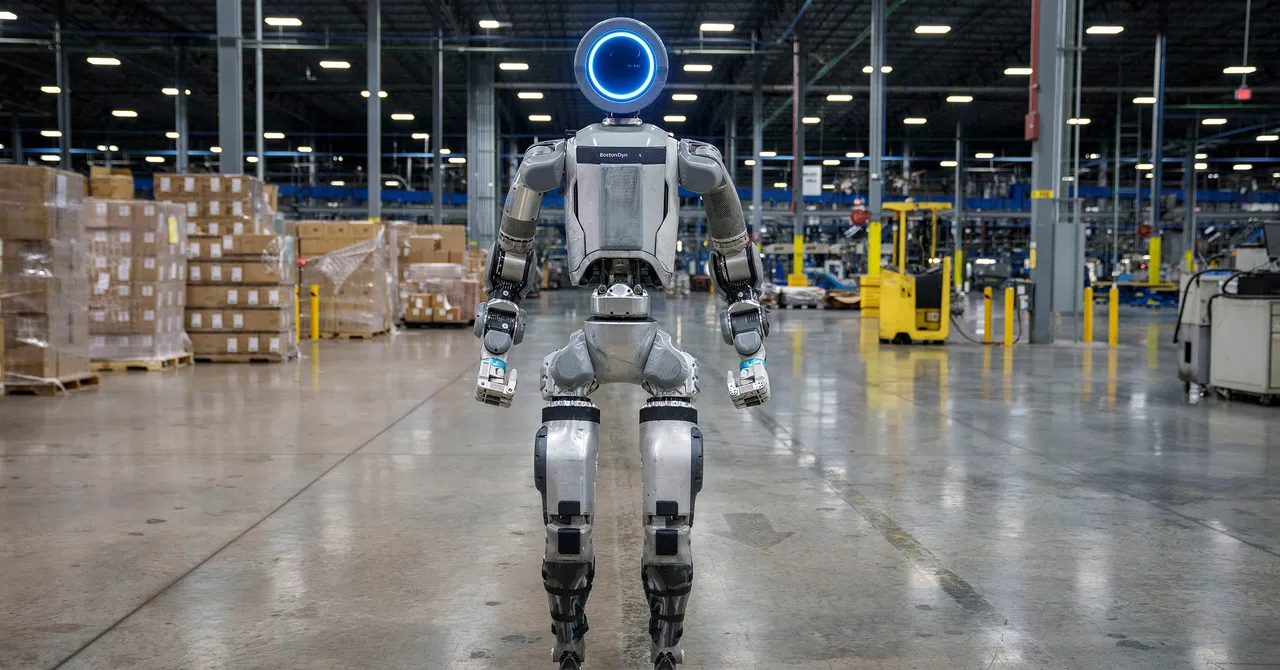
For several decades, Boston Dynamics has been at the forefront of creating advanced robots, including humanoids and four-legged systems that the military has tested for transporting supplies across challenging terrain. The company was sold to Google in 2013 and later acquired by SoftBank in 2017. In 2021, Hyundai took a controlling stake.
Recently, improvements in motors, batteries, sensors, and other components have made it easier for startups and other companies to enter the robotics market. More than a dozen U.S. firms, such as Agility Robotics, Figure AI, Apptronik, 1X, and Tesla, are developing humanoid robots. The competition is even more intense overseas, with about 200 Chinese companies working on similar technologies, according to CMRA, a Chinese industry association.
Many AI firms are now focusing on robotics, believing that AI models require a better understanding of the physical world to achieve humanlike intelligence. Reports indicate that OpenAI is working on humanoid robots, while Tesla has introduced its own version called Optimus. Several startups aim to create models that can quickly learn a variety of physical tasks, with some hoping to deploy humanlike robots as home helpers despite current limitations.
In November, Google DeepMind hired Boston Dynamics’ former CTO. Instead of building its own robots, Google DeepMind CEO Demis Hassabis envisions using Gemini, their AI, across various robot manufacturers, similar to how Android is utilized on many smartphones.
No one knows the best approach for giving machines the physical intelligence that humans naturally possess, but incorporating AI into industrial systems could significantly enhance their functionality. The data gathered by Boston Dynamics’ robots is expected to improve Gemini’s capacity to navigate the physical environment, according to Playter.
Carolina Parada, senior director of robotics at Google DeepMind, emphasizes that Gemini is designed to be multimodal, which makes it particularly adept at understanding and learning from the physical world. “Google DeepMind’s robotics focus is building advanced AI that can power general-purpose robots,” Parada stated in an interview with WIRED. “Automotive is a great place to start, but certainly our intention is to continue expanding to more and more applications.”
However, allowing AI to manage physical systems could also introduce new risks. Parada notes that, in addition to the safety features already integrated into Boston Dynamics’ systems, Gemini will incorporate a form of artificial reasoning to anticipate and prevent potentially hazardous actions.
Playter emphasizes that ensuring human safety will be vital for the acceptance and success of humanoid robots. “Even the little ones can be dangerous,” he acknowledges.