Garage door opener manufacturer The Chamberlain Group has unveiled a new version of its communication platform, and it’s not looking good for smart home enthusiasts. The Security+ 3.0 platform, introduced with Chamberlain’s latest openers, eliminates the workarounds created by third-party accessory makers like Tailwind, Meross, and Ratgdo that allowed integration with Apple Home, Home Assistant, Amazon Alexa, Google Home, and others. Instead, users are directed to Chamberlain’s ad-heavy MyQ app, which limits partnerships and integrations, nearly all of which require subscriptions, while the app itself remains free for basic door control.
This development indicates that the leading brand in garage door openers is moving away from creating an open, interoperable smart home. By reinforcing a subscription-centered ecosystem, Chamberlain has made a quiet exit from the Connectivity Standards Alliance, the group behind the widely-anticipated smart home standard, Matter, which just announced support for garage door controllers.
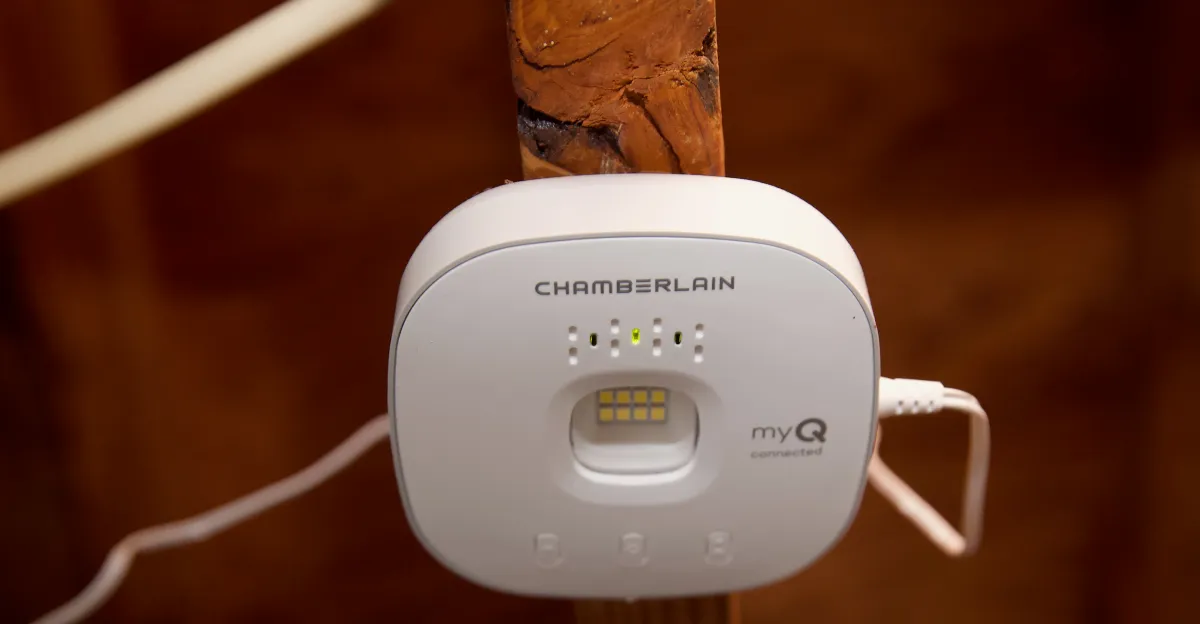
Let’s rewind to 2014 when Chamberlain launched the MyQ Garage, its first smart garage door controller. This accessory wirelessly connects to Chamberlain or Liftmaster openers, allowing you to manage your door from anywhere—an impressive upgrade for many homeowners. Over time, the MyQ system was integrated directly into Chamberlain’s openers, expanding the MyQ ecosystem to include security cameras, video doorbells, and keypads.
Competitors quickly entered the space, including third-party companies offering universal controllers that interfaced directly with the back of the opener. However, they soon found that newer Chamberlain models with patented Security+ 2.0 technology weren’t compatible with their dry-contact triggers. Thus, they developed workarounds—initially by wiring to aftermarket remote controls, and later using software solutions to mimic the rolling security codes used in wired communications. This idea was sparked by Ratgdo founder Paul Wieland, who sought alternatives due to MyQ’s restrictions.
Meanwhile, after being acquired by Blackstone in 2021, Chamberlain started tightening its grip on MyQ technology, embedding it into openers. The company phased out its Apple HomeKit bridge, discontinued Google Assistant integration (after exploring paid options), and blocked unofficial Home Assistant connections. Currently, most available integrations are linked to subscription services or require paid services like Amazon Key, making aftermarket solutions increasingly appealing to users who prefer to control their garage without additional restrictions.
With Security+ 3.0, the workarounds that aftermarket controllers relied on are now nonfunctional. “Aftermarket controllers, such as Ratgdo, Tailwind, Meross, and Konnected.io, will not work with Security 3.0 devices,” Tailwind President Scott Riesebosch explained. “There’s no chance for firmware updates to those products because they communicate through wired channels.”
When asked about this integration issue, Christina Marenson, Senior Manager of Marketing and PR for Chamberlain Group, stated, “Our approach to third-party partner integration remains the same. We’re focused on delivering a secure experience, which means we can only allow approved integrations including Alarm.com, Resideo, Ring, Vivint, and IFTTT.”
Security+ 3.0 introduces a whole new communication framework and hardware design meant to modernize Chamberlain’s offerings for today’s smart homes. New remotes and keypads can now be customized for specific users, tracking who opened the door and when.
Chamberlain claims the shift to fully wireless communication, where wired connections now only power the opener and safety sensors, enhances security and functionality. Marenson explains that they’ve built upon the rolling code technology encryption, now augmented with Bluetooth Low Energy (BLE), to improve the handshake process, speed, and range.
The proprietary rolling code technology has already made it tough for third-party devices to work with MyQ. The transition to entirely wireless communication means that previous software-based solutions for these devices will no longer be effective with the new models. Nate Clark, founder of Konnected.io, confirmed this on the Konnected forum, noting that it’s an intentional strategy by Chamberlain to keep users locked into MyQ.
For many Chamberlain customers, the MyQ app is functional—albeit occasionally cluttered with ads and upsell prompts for cloud storage tied to their cameras, which are now integrated into the openers. Yet, plenty of users prefer a streamlined control experience without relying on multiple apps or cloud-dependent access.
Currently, MyQ doesn’t sync with major home automation platforms like Apple Home, Amazon Alexa, and Google Home. Its connections mainly involve subscription-based security firms like Alarm.com and Vivint. Unlike integrated systems that maintain free access via CarPlay or Android Auto, Chamberlain collaborates with car manufacturers like Honda and Volkswagen, charging around $50 a year to open the garage door directly from your vehicle’s control screen. They do utilize HomeLink, a free proprietary solution, for local connections and cloud access.
Chamberlain commands over 70 percent of the U.S. market, but alternatives are available. Riesebosch recommends Genie and its Aladdin connectivity platform due to its more open stance on smart home integrations. Lock-maker Kwikset has also released an opener claiming compatibility with Matter.
That said, if you end up with a Chamberlain Security+ 3.0 garage door opener (the easiest identifier being the learn button; a white round indicates 3.0, yellow means 2.0), aftermarket manufacturers are working on solutions. However, Riesebosch highlights the challenges ahead, noting, “Chamberlain has erected some formidable barriers.”
One of those barriers includes a new validation process to ensure that any connecting remote or accessory is genuinely made by Chamberlain, preventing counterfeits and clones. Marenson noted this cloud-based authentication was introduced to combat increasing counterfeit accessories that don’t meet their performance and security standards, further protecting users and the integrity of the MyQ experience.
For the tech-savvy, it’s possible to modify a Chamberlain Security+ 3.0 remote by wiring it to your preferred controller. But there’s also a simpler approach available.
The Third Reality garage door controller, priced at $50, is a straightforward device that houses your garage remote and activates the button with a mechanical finger when instructed by any Matter smart home system. It works seamlessly with Apple Home, Amazon Alexa, Google Home, Samsung SmartThings, and Home Assistant, offering complete integration for smart home control.
Chamberlain’s new remotes for the Security+ 3.0 line seem comparable in size to existing models, suggesting they should fit within this gadget. It will be interesting to see how Chamberlain attempts to curb this workaround.