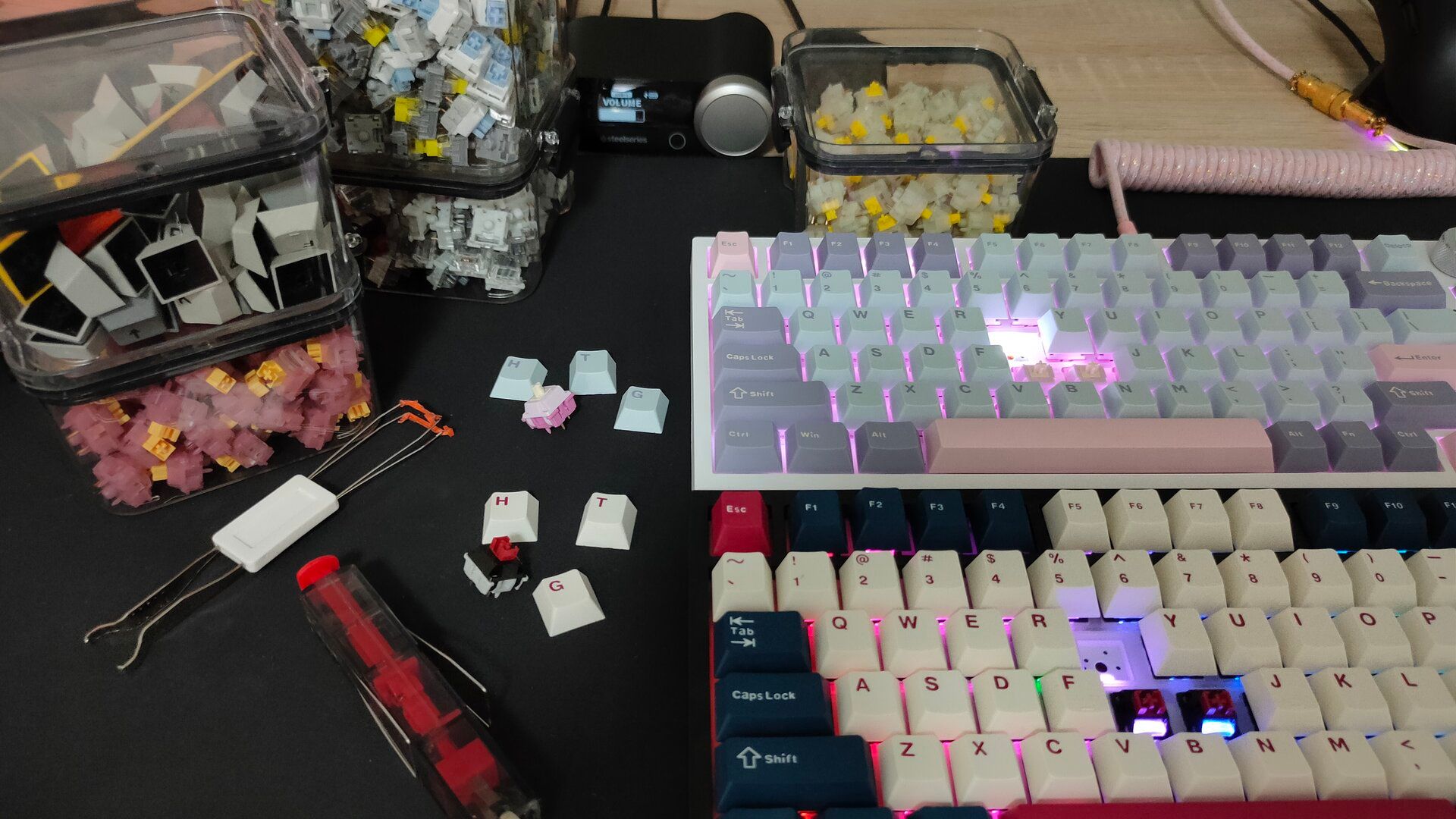
### Custom Mechanical Keyboards: Why They Can Be Pricey
If you’ve ventured into the world of custom mechanical keyboards, you’ve probably come across builds that cost over $500. In some cases, just the base kit is more expensive than a premium pre-built keyboard. Why are these keyboards so pricey, and do they really merit the investment?
### What Exactly Is a Custom Keyboard?
Before diving into the details, let’s clarify what a custom keyboard entails. For die-hard enthusiasts, it means creating a keyboard entirely from scratch. This involves selecting every component, including the case, PCB (printed circuit board), backplate, and even sound-dampening materials. Some people even 3D print their own parts or use CNC machines.
For most people, “custom” also encompasses keyboards built from a “barebones kit.” These kits typically include essential components like the case, PCB, stabilizers, and sound-dampening materials, but you’ll need to buy and install your own switches and keycaps. Models like the Corsair MAKR 75, Glorious GMMK 3, and Drop CSTM80 provide options that let you customize the sound and feel of your keyboard.
### Advantages of Barebones Kits
The appeal of barebones kits lies in their simplicity. They contain everything you need to get started, allowing you to bypass the headaches often associated with sourcing components. While they might not be as personal as a fully custom build, they still offer a level of customization that sets them apart from standard pre-assembled keyboards.
### Why Is Building a Custom Keyboard So Costly?
One major factor driving up costs is the assembly of different parts. Whether you’re sourcing items from various manufacturers or online stores, shipping fees can quickly add up, often equating to the price of an entry-level mechanical keyboard.
Barebones kits may be beginner-friendly, but they tend to come with a hefty price tag. For example, the Keychron Q5 barebones kit is priced at $185 (currently discounted to $129.99), while a fully assembled version is only $20 more at $205 (on sale for $149.99). By choosing the barebones kit, you’re saving money on assembly labor but still spending a significant amount on key components.
When it comes to switches, a decent budget choice like Outemu Red Switches runs about 26 cents each. However, if you’re investing in a custom keyboard, opting for higher-quality components is advisable. Quality switches ideally cost around 50 cents apiece. For instance, Gateron Oil King V2 switches come in at about $0.67 each, while premium options like Zeal Pearlio can skyrocket to $1.12 apiece.
Keycaps can also trigger the “sunk cost fallacy.” After spending hundreds on the kit and switches, it feels reasonable to splurge on quality keycaps—after all, they’re the only part you actually touch. While budget options like Womier Double Shot PBT Keycaps are solid, many enthusiasts prefer investing in high-end sets like the Drop DSA Astrolokeys for their exceptional aesthetics and craftsmanship.
### Are Custom Keyboards Worth the Money?
Even though barebones kits can be costly, they allow you to invest in high-quality parts rather than just paying for pre-assembly. With these kits, you get a robust aluminum case, a quality PCB with hot-swappable sockets, and other features designed for durability and performance. The investment in superior switches and keycaps truly pays off in terms of feel and look.
In fact, some enthusiasts turn this hobby into a small business by assembling and selling custom keyboards on platforms like Facebook Marketplace, Etsy, or eBay. Even if you don’t plan to sell, your build will likely retain much of its resale value, making it easier to recoup some of your initial investment.
### Exploring More Affordable Options
Building a fully custom keyboard can be an expensive journey. If you’re just starting out, consider building a semi-custom keyboard instead. You can achieve this by using pre-built models with hot-swappable switches. For instance, I currently own two budget-friendly models, the Ajazz AK820 Pro and its non-Pro counterpart, both together costing less than $100.
I ordered them with different types of switches—linear and tactile—and used them for several months. Each time I swapped the switches or keycaps, the sound and feel transformed completely. My current setup features Akko switches that provide fantastic value.
With PBT keycap sets priced around $12, my total investment for these keyboards is about $35 each, a worthwhile expense for the flexibility they offer. While not “custom” in the strictest sense, this experience comes close, allowing for a unique setup tailored to my preferences.
Mechanical keyboards can be a pricey hobby, but pursuing custom builds is definitely a rewarding venture. Once you know what features, sound, and feel you prefer, you can create a unique keyboard that enhances both your workspace and typing experience.