Summary
Bacteria can enhance lunar soil for brick production on the Moon, significantly reducing construction costs. These microbes generate calcium carbonate, which effectively fills gaps in building materials. The addition of guar bean extract boosts the strength of these lunar bricks substantially.
Humanity’s long-standing relationship with bacteria has spanned centuries, influencing numerous fields such as fermentation, agriculture, vaccine development, and genetic engineering. Soon, these microorganisms may play a pivotal role in creating durable bricks for habitats on the Moon. Researchers from the Indian Institute of Science (IISc) have pioneered a bacterial method to produce robust, brick-like structures suitable for the Moon’s harsh environment. This innovative approach utilizes lunar soil as a foundational material, aligning with NASA’s concept of In-Situ Resource Utilization (ISRU).
Addressing a Key Challenge
One of the primary obstacles in establishing extraterrestrial settlements is transporting the necessary materials and equipment. Jennifer Edmunson, NASA’s acting Program Manager for the Centennial Challenges, has highlighted the astronomical cost of transporting cargo, estimating expenses between $1 million and $1.12 million per kilogram when shipping from Earth to the Moon.
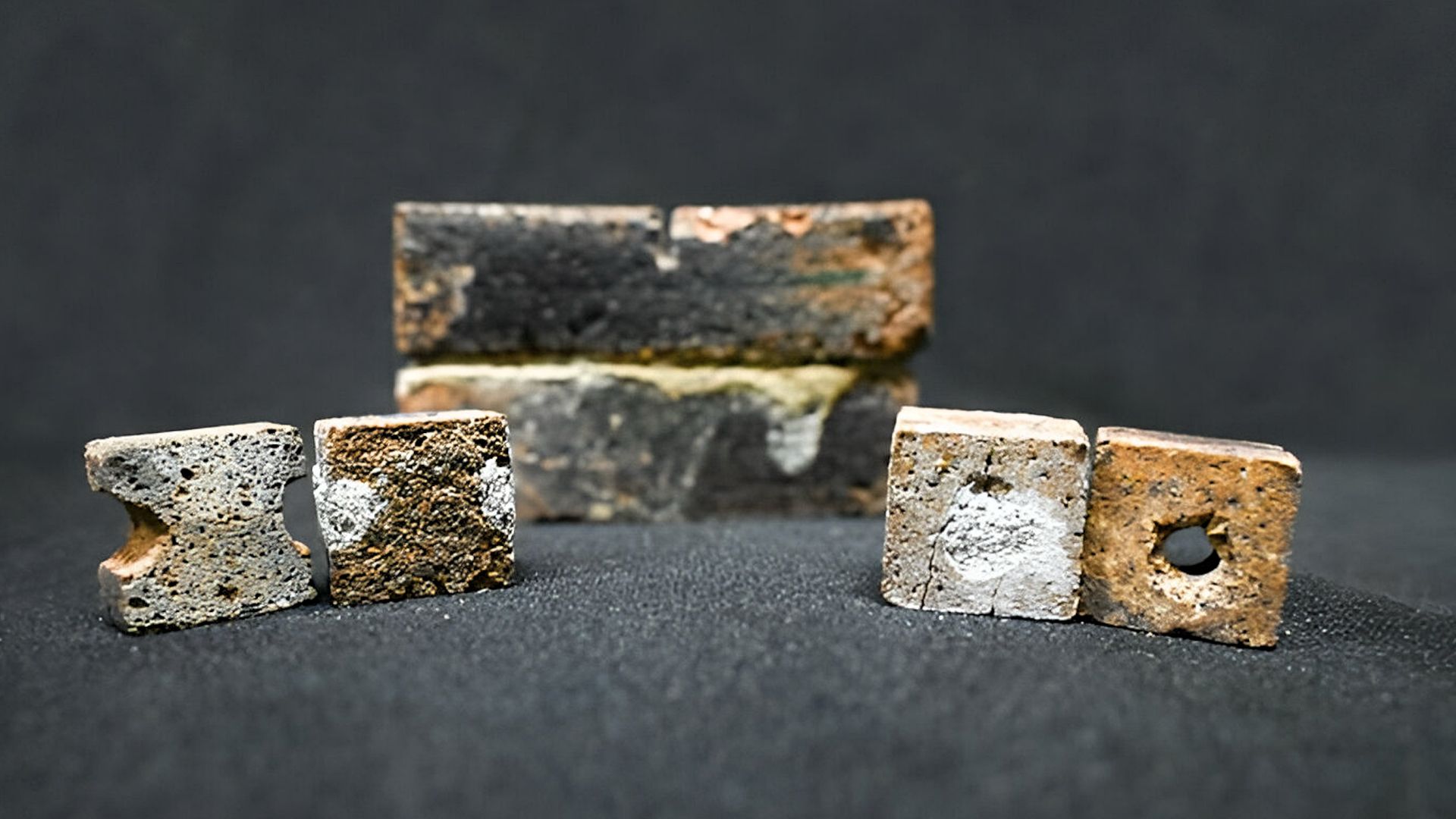
To mitigate these challenges, NASA has been investigating ISRU methodologies that optimize the use of locally available resources on the Moon and Mars. Building on these initiatives, a collaborative team from IISc and the Indian Space Research Organization (ISRO) has developed a unique process for creating what they call “space bricks.” This innovative approach combines lunar soil with urea sourced from urine, along with guar beans—an ingredient common in Indian cuisine known for its food-thickening properties. The guar bean extract acts as an additive, bolstering the material’s structural integrity.
The Role of Bacteria
Central to this process are the bacteria known as Sporosarcina pasteurii. This microorganism facilitates the combination of calcium and urea to form calcium carbonate crystals which fill in cracks that may develop in the bricks over time. The research team notes that the resultant material shows significantly enhanced strength and machinability after a short incubation period. This technique is broadly categorized as bio-cementation, while the specific repair mechanism is termed Microbially Induced Calcium Carbonate Precipitation (MICP). According to research published in the journal Frontiers, the bacterial action could prolong the longevity of lunar bricks on the Moon’s surface.
Interestingly, the use of urine and this particular bacterial strain isn’t new to space exploration. Researchers at the University of Manchester created a material called AstroCrete, which integrates Martian soil with urine and astronaut blood, producing a composite nearly as formidable as concrete. Additionally, the special qualities of Sporosarcina pasteurii have already been showcased in terrestrial projects aimed at environmental alleviation. During a TED Talk, Magnus Larsson illustrated an effective methodology that utilizes these bacteria to solidify sand dunes and combat desertification in the Sahara. Similarly, Ginger Krieg Dosier, an academic at the American University in Sharjah, has developed biobricks using this bacterial strain in conjunction with urine and sand.
The specific role of Sporosarcina pasteurii is to generate calcium carbonate, a compound highly compatible with concrete components. When cracks surface in concrete, the bacterial activity prompts the formation of calcium carbonate, effectively sealing these breaks. Further investigations reported in the PLOS Journal tested another microorganism—Bacillus velezensis—which proved to be approximately ten times more economical and demonstrated double the crack-filling output during laboratory assessments.
The Significance of Guar Beans
Calcium is widely recommended for strengthening bones, paralleling its function in minerals. Research teams at IISc and IIT embarked on the development of space bricks utilizing bacteria, urea, and calcium in their formulations. The base material for these bricks is a lunar soil simulant (LSS), rich in silicon, carbon, oxygen, and aluminum.
The guar gum, derived from guar beans, plays an essential role in enhancing the building material. A study published in the journal Ceramics International revealed that this organic binder could increase the strength of the bricks nearly sixfold. Experimental data indicated that guar gum not only accelerates bacterial growth but also enhances MICP activities.
A remarkable aspect of these space bricks lies in their machinability, allowing for versatile shaping to meet construction needs. A basic lathe suffices for resizing the material, paving the way for easily creating interlocking designs without necessitating complex molds. The research team aims to scale up the production of larger bricks and improve their strength to withstand seismic activities on the lunar surface, including the phenomenon known as "moonquakes."
Looking ahead, the same team is investigating a parallel strategy using bacteria to produce bricks from Martian soil. The primary challenge will be transporting machinery capable of harvesting lunar regolith and converting it into space bricks. As humanity embarks on endeavors like the Artemis mission, the potential for sustainable, long-term lunar habitats seems promising, rekindling the spirit of exploration and innovation that defined our early journeys to the Moon.