The outcome of the war in Ukraine is also being played out in space. The American Starlink satellite network is currently essential to the Ukrainian military, providing connectivity for forces on the ground.
But the unpredictable nature of its owner, billionaire Elon Musk, is worrying Kyiv and the European Union.
“Elon Musk is in fact the guardian of Ukraine’s connectivity on the battlefield. And that’s a strategic vulnerability,” warns Arthur De Liedekerke, Senior Director of European Affairs for Rasmussen Global.
Nevertheless, MEP Christophe Grudler from the Renew Europe parliamentary group maintains that the EU possesses alternative options that can rival the American network.
He states that we undoubtedly possess the capability to substitute Starlink.
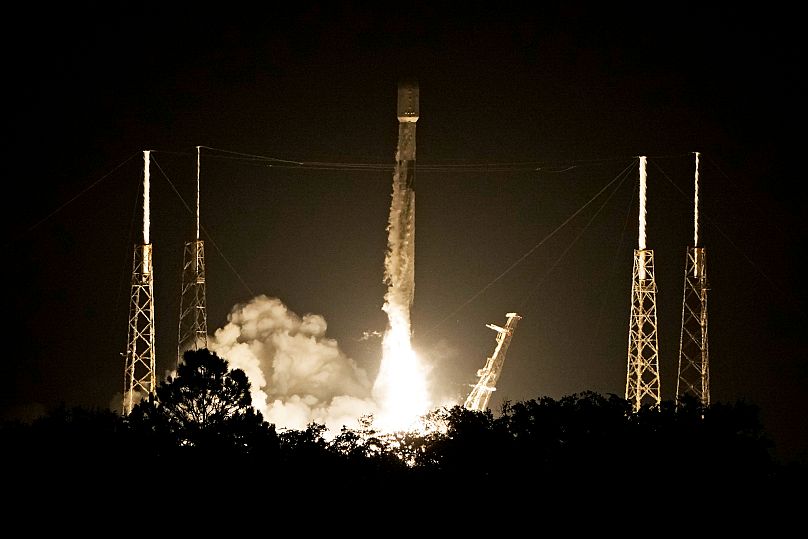
Nonetheless, the French Member of the European Parliament does not wish to hastily opt for this alternative, since replacing Starlink’s extensive satellite constellation will require considerable time.
“It is clear that if Starlink decides to cut the signal today, we have options, in particular with Govsatcom, which is the European network that we have brought into service and which, from June, will make it possible to supplement Starlink’s missing signal in Ukraine, if necessary”, he explained.
Govsatcom is about making available existing government space capabilities. The aim of the system is to provide reliable, secure networks for public authorities in the EU. Ukraine has already expressed an interest in the system.
Christophe Grudler believes that this solution poses no issues.
“The European Union is very committed to helping Ukraine, so there would certainly be agreement from all the Member States to come to Ukraine’s aid if it no longer had a Starlink signal in the future”, he said.
However, Arthur De Liedekerke, who serves as the Senior Director for European Affairs at the political advisory company Rasmussen Global, expresses certain doubts regarding this approach.
“GovSatCom refers to government-secured satellite communications aimed at providing dependable, secure, and strategically independent networks for communication among European Union governments. However, this cannot substitute the type of battlefield connectivity being considered for Ukraine,” he explains.
At present, it’s not a definitive solution.
The industrial solution
Another alternative could be to depend on Eutelsat. This Franco-British firm offers services comparable in quality to Starlink as it too has chosen a low-Earth orbit network infrastructure.
Nonetheless, the size difference between the two companies is significant. Starlink boasts 7,000 satellites versus Eutelsat’s 630. Additionally, Eutelsat operates another 35 satellites in geostationary orbit, which are located farther away from Earth.
The Eutelsat choice presents an industrial and commercial concern. Currently, Starlink boasts approximately 40,000 terminals in Ukraine, utilized not just by military personnel but also by civilians for internet access and making phone calls.
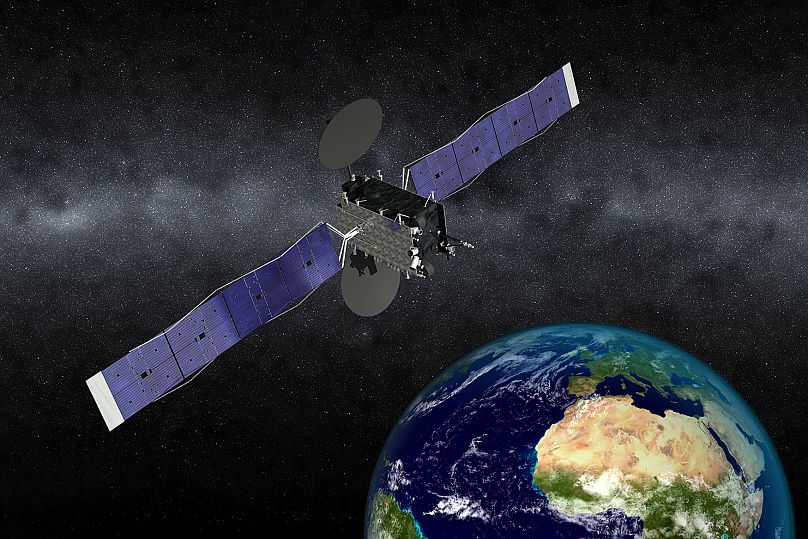
By contrast, Eutelsat has 2,000 terminals on site. A further 4,000 could be deployed shortly and an order has been placed for a further 10,000 devices. Finally, the price of a Starlink terminal is estimated at €500 euros, compared with nearly €9,000 for Eutelsat’s equipment.
But the European company has political advantages, chief among them that it is not dependent on the United States.
“Eutelsat is our European champion, one that has convincing functioning solutions. And one that we need to be able to support through funding and political will,” said Arthur De Liedekerke.
The solution for the future
A final medium-term option exists in the form of the Iris2 project (Infrastructure for Resilience, Interconnection and Security by Satellite).
This network of 290 multi-orbit satellites, in low and medium Earth-orbit, will provide secure connectivity services for the EU.
The star system will provide low latency through extremely rapid transmissions, nearly matching the speed of land-based networks.
The 12-year agreement for the development and management of Iris2, involving both public and private sectors, has been granted to SpaceRISE.
The group comprises Eutelsat, Spain’s Hispasat and Luxembourg-based SES, along with industry leaders such as Thales, OHB, Airbus Defence and Space, Telespazio, Deutsche Telekom, Orange, and Hisdesat.
Nonetheless, Iris2 remains quite distant from being implemented, as the system won’t be entirely functional until the year 2030.

However, Christophe Grudler, who served as the rapporteur for the project at the European Parliament, remains optimistic that the services will be launched earlier than expected.
“Starting in 2028, we will operate the Iris2 constellation, offering telecommunication services to any member states interested. Additionally, I should mention that this will mark our first use of a constellation protected by post-quantum cryptography. This means that cyber attacks targeting this system won’t be feasible. It’s going to be groundbreaking, featuring an extremely secure signal—something even SpaceX’s Starlink doesn’t offer,” he stated.
As per Arthur De Liedekerke, this variety is crucial.
He emphasized that it’s all about having choices. It means avoiding reliance on just one critical element. It’s the ability to reject an option yet remain connected. However, currently, we lack this capability.
We have allowed Ukraine’s conflict zones’ connectivity to depend solely on one individual, which represents a significant weakness in strategy. By providing multiple choices, establishing alternative solutions, and broadening our alliances, we can prevent such reliance on a solitary vulnerable point.