


Trucks are the backbone of the modern global economy, traversing the
world’s longest highways
. In America, semi-rigs are a familiar sight on the interstate networks, hauling tens of thousands of tons of cargo, but have you ever wondered where they get their power from?
You might be surprised to learn that there aren’t that many engines that power semi-trucks, especially the larger ones. Most of them will choose a chassis from a maker like Kenworth, Peterbilt, Freightliner, or Mack and then install a diesel engine of their choice. Major engine makers include Paccar (Kenworth & Peterbilt), Volvo, Mack, Cummins, and Detroit. There really aren’t any other major manufacturers who make semi-truck engines, so the names above will make up the majority, if not the entirety of this list. Also, we have included big names from Europe, Asia, and Australia, as their trucking industries almost rival ours, and they’ve got some amazing offerings as well.
Now, semi-trucks have two main metrics with which we judge their power — horsepower and torque. We’ve already ranked the
12 most powerful semi-truck engines by torque
, so now we’ll cover the 10 most powerful semi-truck diesel engines in terms of horsepower. Note: Sport trucks like the Volvo Iron Knight with 2400 HP are exceedingly cool, but for our article, the engines have to be stock, production variants with no aftermarket tuning or modules.
Read more:
The Most Reliable Duramax Diesel Engines (And Which To Avoid) According To Owners
Mack MP8 – 505 HP
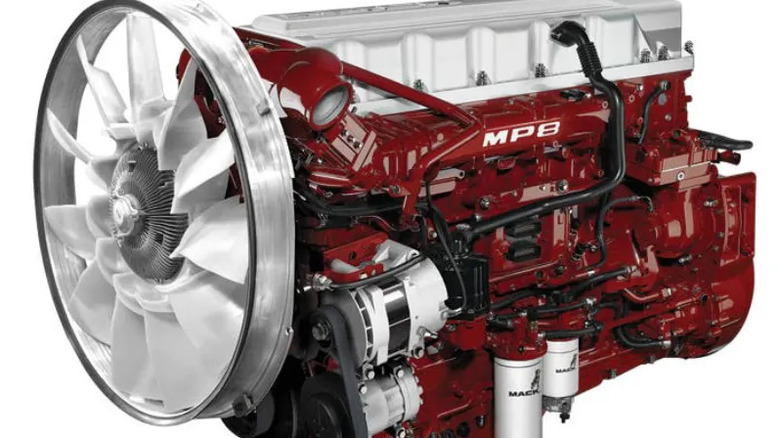
Let’s start with the old faithful workhorse, the Mack MP8. Even though it is the least powerful engine on our list, it still makes a very respectable 505 horsepower, and churns out 1,860 lb-ft of torque to boot. The
MP8 engine can be optioned on every single heavy duty Mack branded truck
, from day cab and sleeper semi-trucks to garbage rigs and specialist construction units. One other engine that competes with the Mack MP8 is the DD15 from Detroit Diesel engines, which also makes exactly 505 horsepower, but less torque, at 1,850 lb-ft.
Mack, who recently made changes to their fan-favorite bulldog hood ornament
The latest model of the MP 8s weighs 88 pounds less than previous versions, resulting in a fuel efficiency improvement of 5% when operating in automatic mode. Furthermore, to adhere to increasingly strict EPA regulations, Mack has modified their diesel exhaust fluid (DEF) aftertreatment system (AT).
A key update to the DEF significantly impacts those who operate in cold climates. Since DEF consists mostly of water—about 67%—it tends to freeze at low temperatures, potentially blocking the system. However, the aftertreatment system within the Mack MP8 addresses this problem by returning all the DEF to the storage tanks when the engine shuts down. This ensures that the lines remain free from ice buildup, allowing the DEF to freeze inside the tank without affecting the rest of the system’s functionality.
The Paccar MX-13 has an output of 510 horsepower.
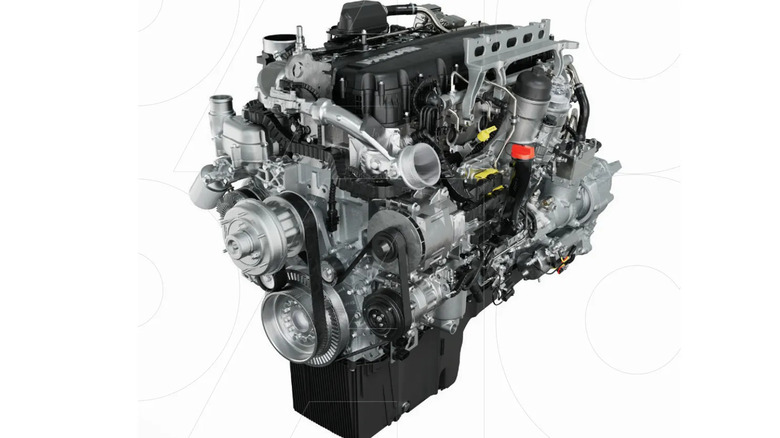
The MX-13 engine is manufactured by Paccar for use with their sibling brands Kenworth and Peterbilt. You can find this engine in popular models such as the Kenworth T680, 880, and W990, along with the Peterbilt 567, 579, and 589. For many years, both Kenworth and Peterbilt trucks came equipped with the Cummins X15 diesel engine. However, some time back, Paccar started producing the MX-13 and integrating it into the Kenworth and Peterbilt product lines. Ever since, the MX-13 has become the default choice across all of these heavyweight hauler tractors, although it should be noted that
many trucks still use the Cummins X15 engine
, which is available as an optional upgrade. The MX-13 comes with 1,850 lb of maximum torque — the same as the Detroit DD15 — and makes 510 brake horsepower from a 12.9-liter displacement inline-six cylinder engine.
Paccar has announced that all newly produced MX-13 engines will adhere to the more stringent EURO 6 emission standards and feature a new catalytic converter system. Additionally, the MX-13 comes equipped with an enhanced soot filter as a standard component throughout the lineup, reducing the frequency of recirculated exhaust gases emitted from the engine.
Detroit DD13 – 525 HP
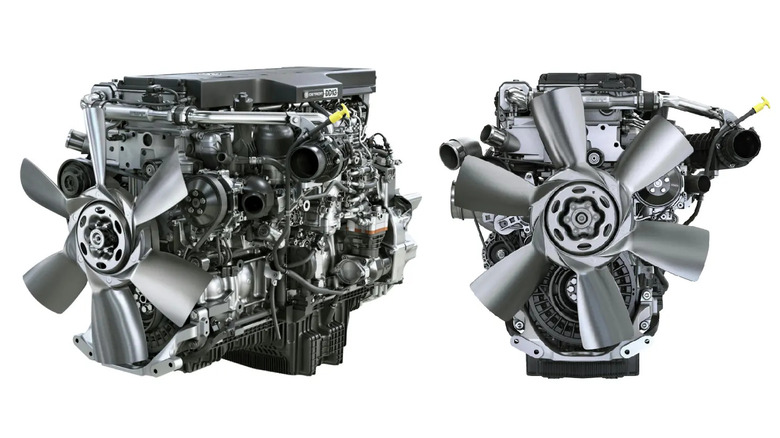
Up next is the 12.8-liter DD13 inline six-cylinder engine, known for delivering an impressive 1,850 pound-feet of torque along with up to 525 peak horsepower. This powerful unit can be found in vehicles such as the fourth and fifth generations of the Freightliner Cascadia, as well as the Western Star 47, 49, and 57 series trucks. As a Class Eight diesel engine equipped with a fixed geometry turbocharger, significant redesigns have taken place for recent versions. These updates include swirl pistons, both front and rear engine power takeoffs (FEPTO & REPTO), and a brand-new exhaust treatment system. Additionally, it features a novel ten-pin fuel injector setup designed for asymmetrical injection, leading to fewer regenerative cycles and enhanced longevity. According to Detroit’s estimates, these modifications purportedly boost mileage efficiency by approximately four percent; however, concrete evidence from actual usage remains pending.
Based on your requirements, you can set up your DD13 to meet EPA, CARB, OBD, and/or GHG standards. However, if you’re considering the M2 112 Plus from Freightliner, keep in mind that you cannot choose a CARB-compliant DD13. As anticipated, the DD13 includes all standard high-end features like Detroit Connect, the Detroit Virtual Technician, and remote OTA software upgrades. One notable feature worth emphasizing is that the Detroit DD13 boasts the industry’s longest maintenance intervals: 35,000 miles for both engine oil and fuel filters, followed by a valve lash check at 100,000 miles, with subsequent checks every 500,000 miles thereafter.
Cummins X15 – 565 Horsepower
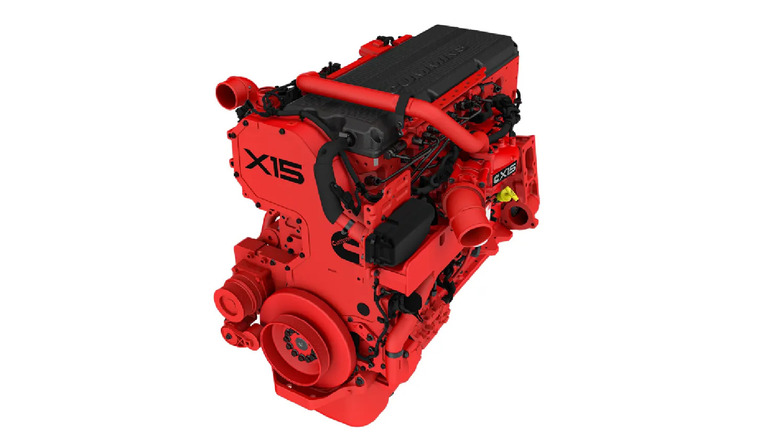
Undoubtedly one of the most iconic engines on this list, the X15 diesel engine manufactured by Cummins delivers an impressive 565 horsepower along with a substantial 2,050 lb-ft of torque using a 14.8-liter inline-six configuration. It’s worth noting that this isn’t even the biggest offering from Cummins; they produce larger units as well.
Cummins also make train engines
, but is certainly the company’s biggest truck engine. The X15 is EPA 2024 certified and meets Greenhouse Gas Phase II requirements. Cummins has also used more than a million miles of testing data, and has come up with a system that predicts the remaining life of all the consumable items on the X15, like the fuel filter, urea filter, diesel particulate filters (DPFs), oil filters, and even the oil itself.
All X15 engines will also get access to Cummins’ Connected Solutions (CCS), which is a proprietary software that assists with over the air (OTA) software upgrading and remote diagnostics. In addition, all X15 engines are programmed to work with Guidanz, which is Cummins’ servicing technology package. You’ll find the Cummins X15 in trucks like the LT and HX lines from International, the Cascadia lineup from Freightliner, and of course, the big haulers from Peterbilt and Kenworth like the 589 and T880. Given that
All of these are top-selling models.
Chances are that the large trucks you encounter on the highways are running on engines manufactured by Cummins.
Cursor 13 – 570 HP
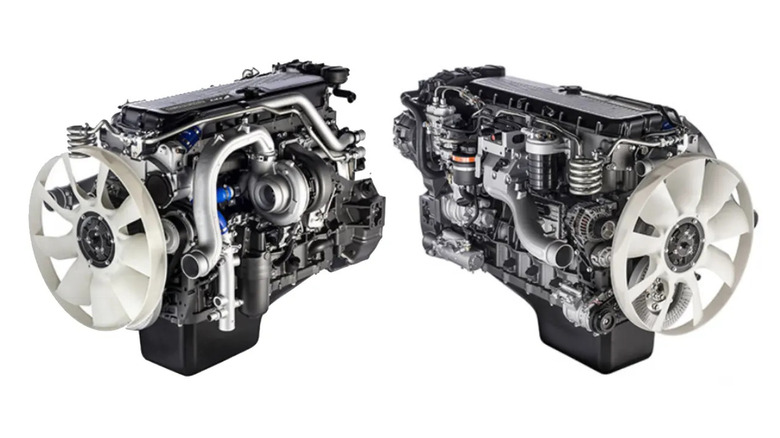
Now for our first non-American engine, the Cursor 13, which has been developed by FPT industrial, which itself is a subsidiary of the huge IVECO group. IVECO makes the Cursor 13 in several variants, including one for heavy trucks. As of 2025, the Cursor 13 truck engine is offered in six different power levels, starting from 302 kW (405 horsepower) and 1,564 lb-ft of maximum torque. The most powerful Cursor 13 variant is approximately 50% more powerful, as it can make up to 600 horsepower and 1,770 lb-ft of torque, and was designed to power trucks 16 tons gross vehicle weight (GVW) and over.
The lower-powered engine variants use a wastegate turbocharger, but the 600 horsepower variant uses an electronically-controlled variable geometry (eVGT) turbocharger. All variants of the Cursor 13 have a dry weight of 1,132 kilograms (2,496 pounds) and use common-rail injection systems. Finally, all Cursor 13 engines come with the same aftertreatment system, consisting of a diesel oxidation catalyst (DOC), diesel particulate filter (DPF), selective catalytic reduction (SCR), and a clean-up catalyst (CUC).
Detroit DD16 – 600 horsepower
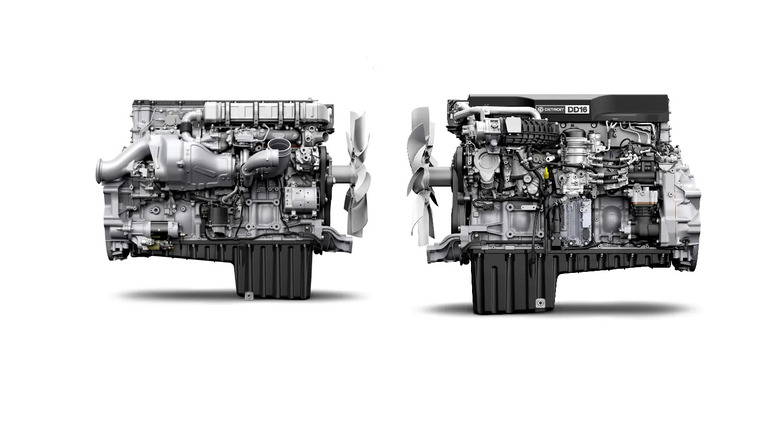
The widely-used engine in today’s market is the 15.6-liter inline-six DD16 produced by Detroit, delivering an impressive output of 600 horsepower along with 2,050 lb-ft of torque. This powerhouse can be found powering the 49XX and 57XX models from Western Star as well as the newest generation of Cascadia trucks manufactured by Freightliner. Among all their offerings, the DD16 stands out not only because it is the strongest but also due to its cutting-edge technology. Remarkably, this engine still complies with stringent emission standards. Its fuel injectors function at a consistent high-pressure setting of 38,000 PSI through an innovative enhanced common-rail injection mechanism known as ACRS. Consequently, this setup facilitates better efficiency and cleanliness during combustion processes. Additionally, the DD16 incorporates a distinctive twin-turbocharging design; one turbo boosts performance while another uses energy from exhaust gases to further enhance power delivery.
Apparently, the exhaust turbine unit captures heat along with other unutilized exhaust gases and employs these to rotate its blades, thereby adding extra power and torque to the system. This seems logical since the aftertreatment system will circulate the exhaust gases multiple times regardless; thus, extracting additional power from them appears beneficial. Additionally, the DD16 offers three tiers of engine braking thanks to what Detroit refers to as their “Jacobs” brake.
Mercedes OM 502 LA – 612 horsepower
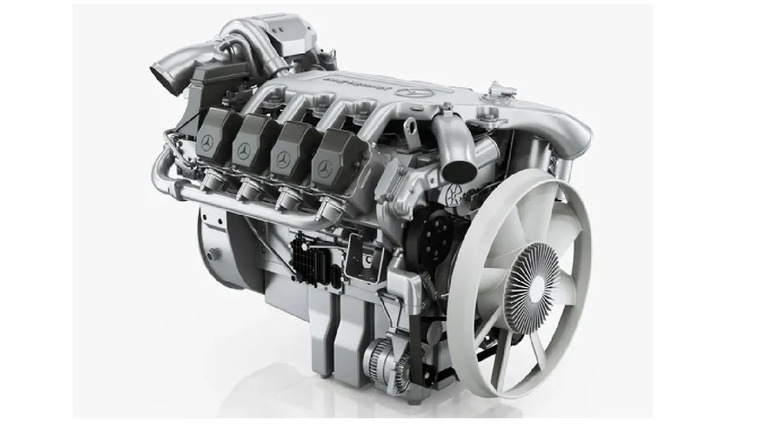
If you’ve spotted a Mercedes semi-truck before, chances are it was an Actros model; and if you saw one alongside another vehicle, it likely featured the OM 502 or OM 501 engine manufactured by Mercedes. Among these, the OM 501 delivers slightly less power at 435 horsepower compared to the more powerful OM 502, which stands as the premium option offered by Mercedes Trucks today.
The bigger powerhouse between them is the 502 LA, boasting 450 kW (equivalent to 612 horsepower), along with a substantial 2,700 Nm (or approximately 1,991 lb-ft) of torque sourced from a robust 15.9-liter V8 configuration. This formidable setup pairs seamlessly with either a 12- or 16-speed G-Series PowerShift transmission provided by Mercedes themselves. Such a combination equips European drivers with numerous advanced functionalities including high-speed backing up capabilities, enhanced cruising modes starting as low as 2 km/h (around 1.25 mph), specialized off-road assistance known as rock-free mode, and even allows shifting directly from drive to reverse without passing through neutral gears.
In addition, most 502 engines will also be Euro emissions standard compliant, with all engine systems being controlled by an engine management system (EMS) called “Telligent”. Another standout feature on the 502 LA from Mercedes is that, just like the DD16, recirculated exhaust air is used to generate extra power for the engine to use under heavy loads. The only difference between the DD16 and OM 502 LA systems is that Mercedes uses not one, but two exhaust gas turbochargers and a unit pump system (UPS). It’s nice to see Mercedes keeping this engine alive, as it allows for flat-front nose semi-trucks, which have all but disappeared in America — and who knows if these good-looking rigs will ever be back.
MAN TGX D38 – 660 HP
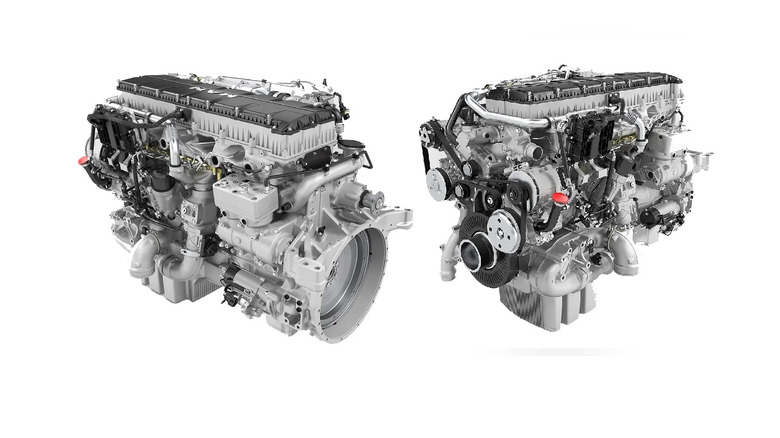
MAN trucks are primarily sold in Europe and are produced in Germany since MAN is a subsidiary of Volkswagen Group.
Volkswagen group, which owns plenty of other brands as well
. It only makes sense then, that the biggest MAN trucks like the TGX line, will be powered by the most powerful MAN engine, which is the D38. Technically, the full name for this engine is the — get ready — MAN D3876 LE12x, but the industry calls it the D38 for simplicity. It is offered in three main variants: 565 horsepower, 612 horsepower, and 660 horsepower, with corresponding torque variations as well. The displacement for all variants is on the higher side by European standards, at 15.26 liters overall, producing a mind-bending 3,000 Nm (2,213 lb-ft) of torque, by operating at 2,500 bar (36,260 PSI). The engine is fully compliant with the latest US EPA and/ or CARB regulations, and was unveiled at IAA Nutzfahrzeuge in Germany.
Boasting a weight of 1,337 kilograms (2,948 pounds), the MAN D38 isn’t particularly lightweight; nonetheless, it compensates for this with minimal maintenance expenses, readily accessible original equipment manufacturer components, a robust variable-geometry turbocharger, shared part sets with other MAN engine models, and an impressive capability to tow up to 120 metric tons—a significant advantage over its American rivals, which have federal restrictions limiting them to 80,000 pounds on roads. This performance stands out as quite remarkable because even if regulations permitted hauling heavier loads, there’s no assurance that engines from manufacturers like Mack, Paccar, or Cummins could match the durability of the MAN D38.
shines
.
Volvo D17 – 780 horsepower
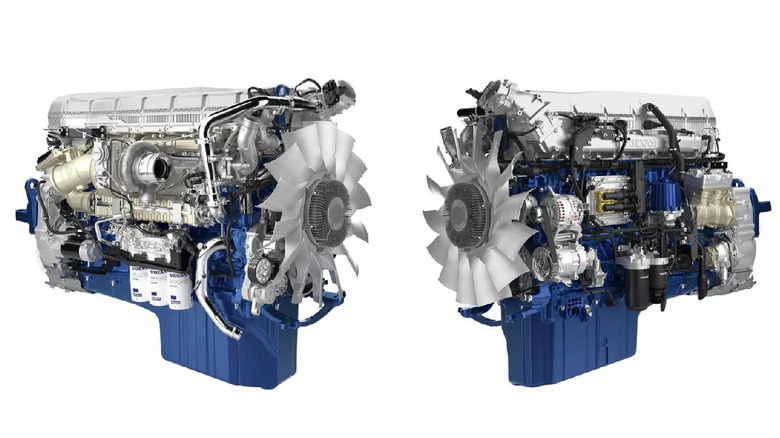
The newest addition to Volvo’s lineup is the D17 engine, boasting the largest displacement with 17.3 liters, generating up to 780 brake horsepower along with an impressive 2,803 lb-ft of torque. Although it hasn’t hit European markets just yet, where Volvo typically sells their engines, testing activities have taken place in Australia starting earlier this year. It appears they’re using prototype setups primarily aimed at gathering operational insights about the D17 engine, likely destined for use in Volvo’s long-haul FH series vehicles. This new model aims to surpass the capabilities of their present high-end offering—the D13 engine, delivering 500 horsepower alongside 1,650 lb-ft of torque. One notable aspect of the D17 is its versatility regarding fuel types; customers can opt between traditional diesel, the recently launched biofuel known as HVO, and anticipate compatibility with pure B100 biodiesel in upcoming versions.
Weichai WP17H – 800 horsepower
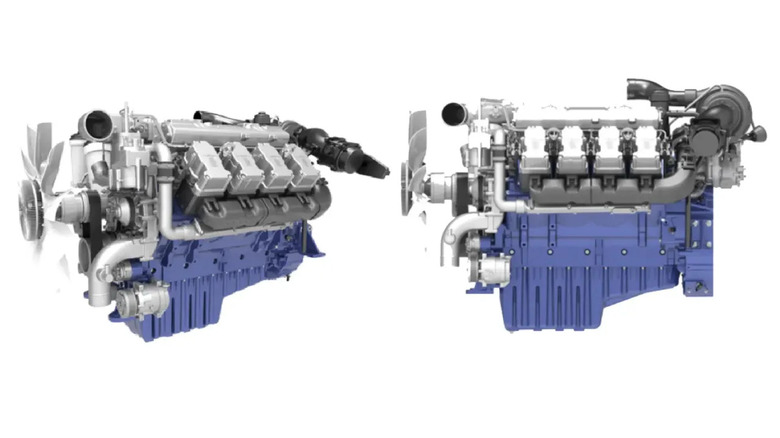
The Weichai WP17H stands out as the most potent diesel engine installed in a mass-produced truck. Installed in the Shacman X6000, this powerhouse generates an impressive 800 horsepower along with a maximum torque of 2,766 pound-feet. This setup is often considered the strongest production truck globally; however, it remains uncertain if either Weichai or Shacman plans to broaden their range further. One notable feature of the Weichai WP17H engine is its durability rating, capable of enduring up to two million kilometers (approximately 1.24 million miles) of uninterrupted use.
At present, the Shacman equipped with Weichai engines is manufactured and utilized within China; however, these vehicles are also marketed in Russia. Future growth strategies may extend into Argentina as well as encompass various countries across Latin America. Focusing specifically on the colossal Weichai WP17H engine installed in this model, it features an impressive displacement of 16.6 liters and operates using a four-stroke V8 design, making it undoubtedly one of the largest V-8 engines globally. This particular engine comes in several variants tailored for specific applications such as cranes, farming equipment, mining machinery, and construction tools. The WP17H truly stands out due to its size, strength, and high torque output. It remains to be seen whether manufacturers like Paccar, Mack, Cummins, or Detroit will ever introduce anything comparable.
That concludes our list of the top 10 most potent diesel engines that have driven semitrucks. Whether they’re pulling flatbed trailers or custom vehicles, these engines ensure global heavy industries stay operational. Now you can impress your relatives with this intriguing tidbit at the upcoming family gathering.
Want the latest in tech and auto trends?
Subscribe to our free newsletter
for the latest headlines, expert guides, and how-to tips, one email at a time.
Read the
original article on GAPTEKZONE
.


