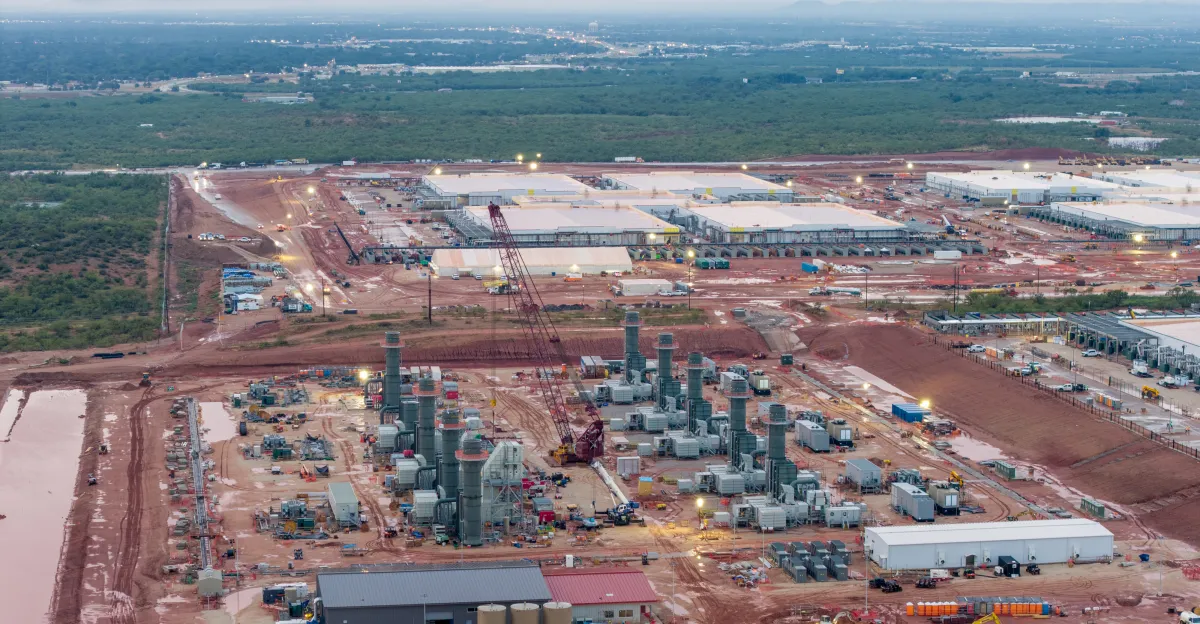
The US is currently at the forefront of a global uptick in new gas power plants, primarily driven by the increasing energy demands of data centers. However, this surge in gas usage also equates to a rise in planet-warming pollution. The capacity for gas-fired power generation being developed worldwide saw a 31 percent increase in 2025, with almost a quarter of that growth happening in the US. This marks a significant shift as the US has overtaken China, demonstrating the largest increase of any country. A recent analysis by the nonprofit Global Energy Monitor (GEM) indicates that over a third of this growth in the US is aimed directly at powering data centers.
The demand for more powerful hardware in expanding data centers—particularly those focused on generative AI—has led to projections of massive increases in power requirements. Despite some uncertainty about the extent to which AI will permeate daily life, leading to potential underutilization of proposed data centers, plans for new gas plants centered around AI are impeding the transition to cleaner energy sources.
“There is a risk that this capacity could lock in future emissions and become stranded assets if anticipated electricity demand from AI never materializes,” stated Jenny Martos, a project manager for GEM’s Global Oil and Gas Plant Tracker, in a recent press release.
The year 2026 is on track to break records for gas generation. If all proposed projects move forward this year, it would surpass the record set back in 2002. This is particularly striking considering that the early 2000s marked America’s “shale gas revolution,” which allowed access to previously untapped reserves. Gas is currently cheaper than coal and produces lower carbon emissions when burned, although it does release methane, a greenhouse gas that is significantly more potent than carbon dioxide, even if its atmospheric life is shorter.
Increasing electricity generation from gas represents a stark departure from global climate goals. A decade ago, nearly every country, including the US and China—the top two greenhouse gas emitters—committed to a historic agreement in Paris aimed at limiting global warming. Achieving the ambitious targets set in the Paris Agreement hinges on replacing fossil fuels with cleaner alternatives and achieving net-zero greenhouse gas emissions by approximately 2050.