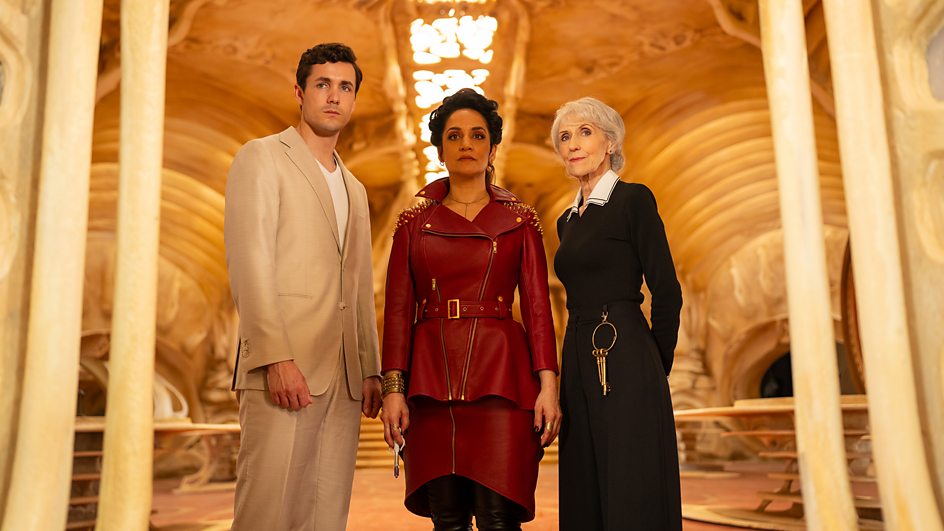
"Wish World" Recap: A Complex Narrative of Paranoia and Identity
Introduction to the Episode
The latest episode of Doctor Who, titled "Wish World," raises intriguing questions about identity and societal norms within a seemingly idyllic environment. Despite its ambitious themes, the episode struggles with narrative coherence, drawing comparisons to "The Sound of Drums / Last of the Time Lords."
A Return to the Past: The Rani’s Resurrection
The episode opens in Bavaria in 1865, where the cloaked figure of the Rani, a classic series antagonist, makes her return. She encounters Otto Zufall, a rural villager expecting a midwife for his ailing wife, Violett. This interaction ignites a dark twist when the Rani declares the couple’s newborn possesses extraordinary abilities. In a chilling demonstration of her power, she terminates Violett’s life with a breath and transforms Otto’s other children and him into ducks and an owl, respectively.
Domestic Bliss or Dystopian Illusion?
Transitioning to May 23, 2025, we meet John Smith—the Doctor—and his wife, Belinda, who share a sense of domestic harmony, alongside their daughter, Poppy. However, this seemingly perfect life is juxtaposed against a backdrop of outdated technology and an eerie atmosphere. The household’s retro aesthetic features 14-inch CRT TVs that exclusively broadcast surreal news from Conrad, a character ominously revealing that "great weather" awaits.
As breakfast unfolds, a mysterious incident occurs when the Doctor’s mug inexplicably shatters. The town’s peculiarities deepen, with neighbors and friends, like Mel, immersed in their mundane routines, unaware of the strange undercurrents shaping their lives.
The Rise of Paranoia
Overarching the story is a towering bone structure, which looms above the city like an ominous presence. The skeletal images of dinosaurs roam freely, only to reveal their non-interactive nature. The introduction of a character named Ruby adds another layer. She seems aware of the Doctors’ identities but raises alarms when she questions their family situation, drawing the attention of law enforcement in this oppressive society where doubt is a crime.
At UNIT HQ, we find the Doctor navigating a 1950s bureaucracy, led by the strict Kate Stewart. Here, themes of suppressed desire emerge as colleagues grapple with their emotions, hinting at societal expectations that stifle individuality.
The Manipulator of May Day
Conrad, the antagonist and architect of this bizarre reality, shapes the world through his broadcasted whims. Themes of surveillance and conformity permeate the narrative, highlighting a culture steeped in fear and oppression. Women, like Mel, are relegated to submissive roles, reinforcing patriarchal ideals in a world that values them primarily for their reproductive potential.
Meanwhile, Ruby’s encounter with Shirley—a disabled character living on the fringes of this society—provides a stark contrast to the established norms. Together, they form a connection that reveals the underlying strife present in Conrad’s ordered chaos.
Climax and Confrontation
As the episode progresses, Ruby and Shirley conspire to counterbalance Conrad’s oppressive regime. However, their ambitions intertwine with moments of personal affliction as family dynamics come to the forefront. The stakes heighten at the climax when the Doctor discovers the Rani’s nefarious plan to harness the power of doubt, leading to explosive confrontations.
The episode culminates in a perilous moment for the Doctor, who is left teetering on the edge of a void, struggling to comprehend the full impact of his realities. The tension escalates as he expresses, "Poppy is real! Don’t you know what that means?" before being cast into the abyss.
Conclusion: Themes and Reflections
"Wish World" explores themes of identity, societal values, and the tensions of conformity against the backdrop of a fantasy world. While the episode captivates with its rich visuals and evocative ideas, it wrestles with a coherent narrative structure, leaving viewers pondering the implications of its characters’ journeys.
Russell T. Davies’s innovative yet flawed storytelling elements invite discussion regarding the emotional resonance and the overarching messages that emerge from such complex character dynamics. As the episode closes, questions linger, paving the way for future developments in this thought-provoking saga.