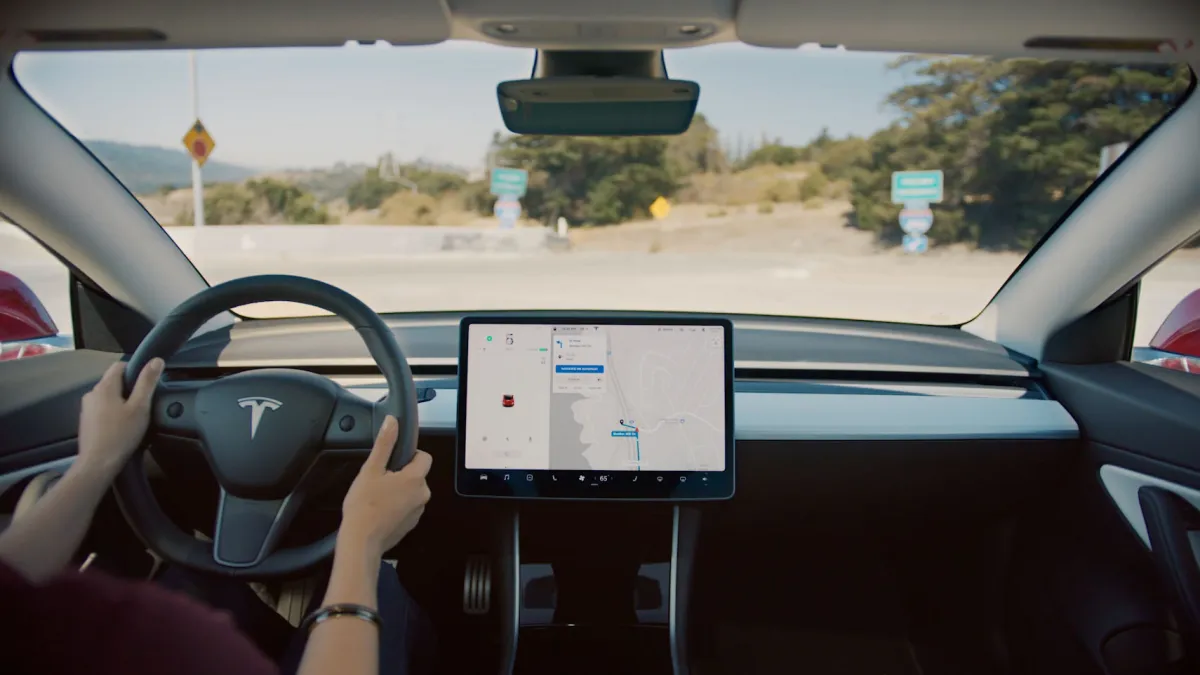
Tesla has officially discontinued Autopilot, its basic driver-assistance system, in an effort to promote its more advanced technology called Full Self-Driving (Supervised).
This move comes as Tesla faces a 30-day suspension of its manufacturing and dealer licenses in California, the company’s largest market in the U.S. A judge ruled in December that Tesla had engaged in misleading marketing by exaggerating the capabilities of Autopilot and FSD over the years. The California DMV, which initiated the case and oversees the licenses, has granted a 60-day stay on the ruling, allowing Tesla to comply by dropping the Autopilot name.
Autopilot combined Traffic Aware Cruise Control, which maintains a set speed while keeping a safe distance from other vehicles, with Autosteer, a feature that helps center the car in its lane.
Currently, Tesla’s online configuration site indicates that new vehicles will only come with standard Traffic Aware Cruise Control. It’s unclear whether existing customers will be impacted by this change.
This decision follows Tesla’s announcement that starting February 14, it would eliminate the one-time $8,000 fee for FSD software. From that point on, access to FSD will only be available through a monthly subscription of $99. CEO Elon Musk mentioned that this subscription price could rise as the software’s capabilities develop.
Musk believes newer Tesla models will eventually support “unsupervised” driving, allowing drivers to “be on your phone or sleeping for the entire ride.” In December, he noted that a new version of FSD enabled such capabilities, although texting while driving remains illegal in nearly all states.
On Thursday, Tesla introduced the first robotaxi versions of its Model Y SUVs in Austin, Texas, which operate without human safety monitors inside the vehicles. These cars are equipped with a more advanced version of the company’s driving software, but they are still monitored by other Tesla vehicles for supervision.
Tesla launched its beta version of Full Self-Driving software in late 2020, but it hasn’t gained the adoption many executives, including Musk, had anticipated. As of October 2025, Tesla’s chief financial officer Vaibhav Taneja reported that only 12% of all Tesla customers had opted for the software. Achieving “10 million active FSD subscriptions” by 2035 is a key goal linked to Musk receiving the full benefits of his ambitious $1 trillion compensation package. Tesla first rolled out Autopilot in the early 2010s after unsuccessful negotiations with Google regarding their developing autonomous driving technology, which eventually became Waymo. Autopilot was made standard on all Tesla vehicles in April 2019.
Over the years, Tesla has faced challenges in clearly communicating Autopilot’s capabilities. The company often set high expectations and sometimes portrayed the technology as more advanced than it actually was, leading some drivers to underestimate its limitations. This misunderstanding has resulted in numerous crashes and at least 13 fatalities, according to the National Highway Traffic Safety Administration.