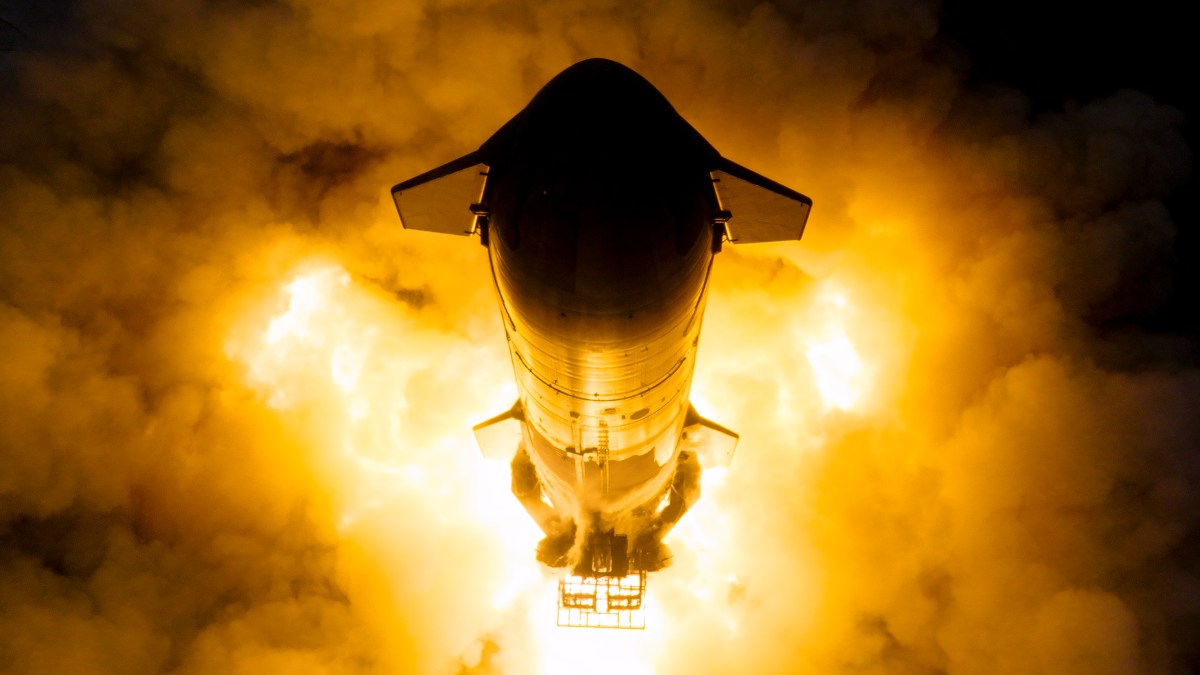
SpaceX Starship Test Rocket Explodes During Pre-Flight Preparations
Late Wednesday night, a Starship rocket owned by SpaceX exploded on a test stand in Texas while the company was gearing up for the tenth test flight of its heavy-lift rocket system.
Safety Measures Confirmed
In a statement shared on X, SpaceX assured that “all personnel are safe and accounted for” following the incident. The company added that there were “no hazards to residents in surrounding communities.” A subsequent update on Thursday revealed that preliminary investigations suggest the explosion was due to a failure of a pressurized tank, specifically a Composite Overwrapped Pressure Vessel (COPV), located in the Starship’s nosecone.
Area Impact and Safety Protocols
The explosion resulted in damage to the surroundings of the test stand, but SpaceX confirmed that there were no injuries reported. Prior to the incident, the area was cleared in anticipation of a “static fire” test involving the Starship’s six Raptor engines, demonstrating the company’s adherence to safety protocols.
Future Test Flight Delays
The recent explosion raises questions about the timeline for SpaceX’s Starship development. Earlier advisories from the Federal Aviation Administration (FAA) indicated that the much-anticipated tenth test flight could take place as early as June 29. However, this timeline may need to be adjusted as the company investigates the cause of Wednesday night’s explosion.
SpaceX CEO Elon Musk referred to the incident in a post, indicating that he viewed it as “just a scratch.”
Ongoing Developments in SpaceX’s Starship Program
Over recent years, SpaceX has been heavily invested in the development of the Starship rocket, which stands at 171 feet, and its accompanying Super Heavy booster, measuring 232 feet. At the beginning of 2025, the company projected this year to be transformative for the Starship program. Moreover, the FAA has recently increased its launch limit for Starship operations in Texas from five to twenty-five.
Notably, 2023 has been marked by several challenges for the Starship project. The rocket experienced explosive failures during its seventh and ninth test flights earlier this year. Despite making advancements during the ninth test in May, the rocket ultimately failed to deploy dummy Starlink satellites, a key element in SpaceX’s ambitions to expand its space-based internet services.
Future Missions and Aspirations
Despite these setbacks, Musk remains optimistic about SpaceX’s goal to launch a Starship mission to Mars as early as 2026, estimating a “50/50” chance of success. Additionally, the company is also working on a more advanced version of Starship, dubbed “Version 3,” which Musk suggested could be operational within the year.
This article has been updated to reflect SpaceX’s latest findings regarding the cause of the explosion.