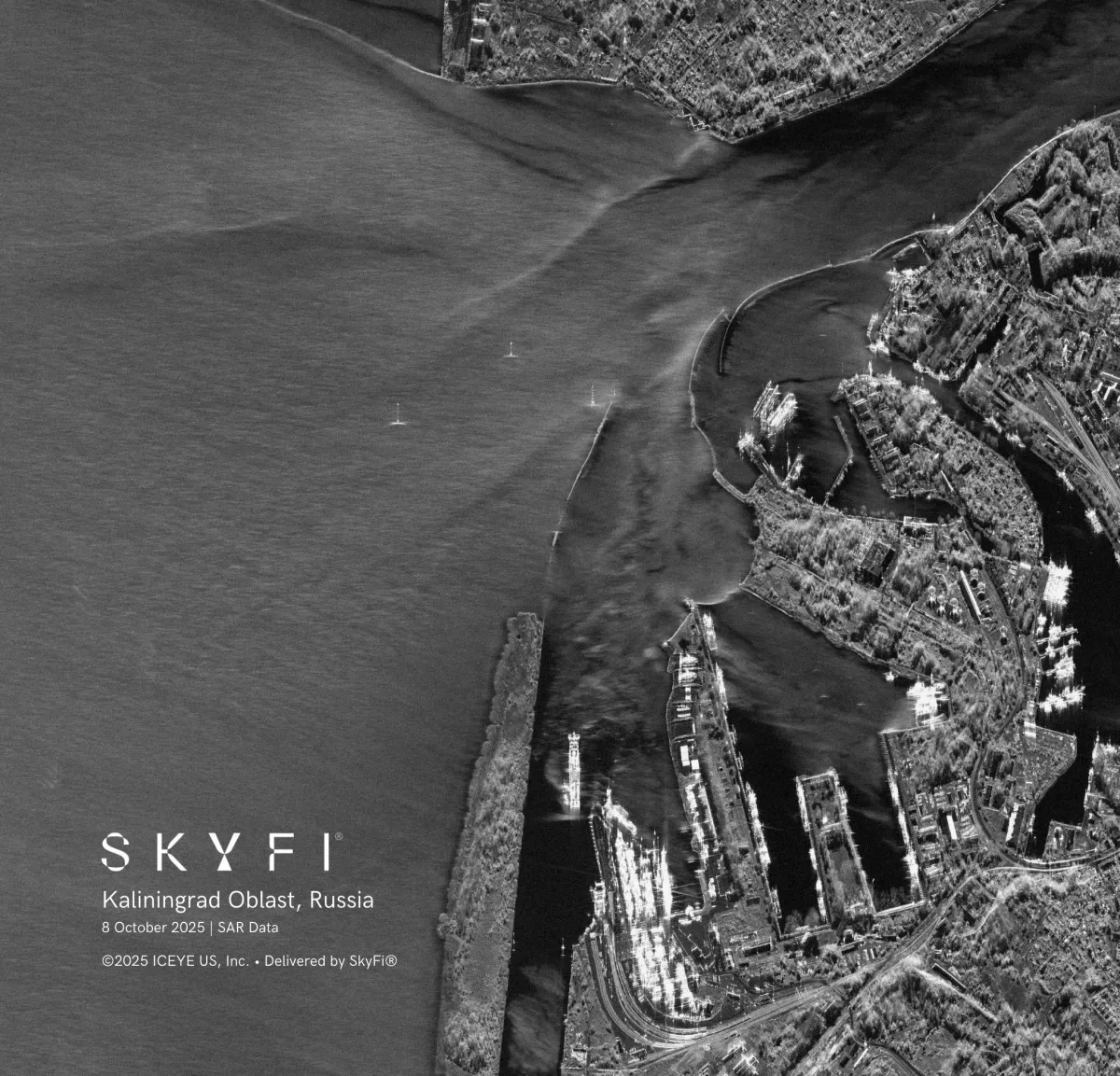
There are thousands of satellites orbiting the Earth, and more of them can now capture all kinds of images in near real time.
In the past, getting access to these images was a bit of a hassle. However, the Austin-based startup SkyFi has created a platform that acts like a “Getty Images” for over 50 geospatial imagery partners. This has become especially popular in sectors like finance, defense, infrastructure, and insurance.
SkyFi’s popularity really took off when it started providing more analytics and insights through its website and mobile app. Customers can also “task” satellites to capture images of specific locations at certain times, CEO Luke Fischer recently shared with TechCrunch in an interview.
“Our main goal is to deliver answers for our customers, both in the government and commercial sectors,” said Fischer. “Imagery is becoming more of a commodity, so it’s not just about how fast we can deliver it, but how quickly we can provide answers.”
The ability to offer both insights and easy access to imagery played a significant role in SkyFi closing a $12.7 million Series A funding round, Fischer noted.
The investor composition for this round is telling. It was co-led by Buoyant Ventures, a climate-focused fund, and IronGate Capital Advisors, which invests in dual-use companies. Other investors included DNV Ventures, the investment arm of a 160-year-old maritime company, Beyond Earth Ventures, a space-focused firm, and TFX Capital, known for its defense-related investments.
Initially, Fischer and co-founder Bill Perkins aimed to raise about $8 million, given Perkins’ background in hedge funds and the focus on actionable insights.
But 2025 saw record investments in defense, and the demand from investors exceeded expectations. Fischer increased the target to $10 million, then $12 million, ultimately securing $12.7 million as strategic investors joined the round.
Fischer explained that SkyFi once faced challenges getting satellite imagery providers to share their data. Now, new providers are easier to onboard.
“It took some time, but we now have the largest virtual constellation of assets,” he said. “This means we have access to all the data supply available and various sensor types.” SkyFi has utilized this data—combined with numerous customer requests over the years—to develop valuable analytical offerings for both commercial and government customers.
“We know precisely what they’re asking for,” he added.
Fischer’s previous experience with Uber’s Elevate division provided him insights into the power of feedback loops.
“Uber tracks where people move around in the world. They layer different products like bikes, scooters, electric aircraft, and drone delivery. We gather similar data on what people are interested in,” he said. “This gives us a better perspective. Plus, being software-first means we’re not burdened by hardware capital expenses.”
Some customers, like hedge funds, will want to conduct their own analytics, Fischer explained. However, most are increasingly interested in the insights that SkyFi provides.
The company plans to use the new funding to expand its offerings, and Fischer takes pride in having developed a product that’s not only powerful but also user-friendly—even to the point that his family uses it.
“My teenage daughters task satellites for their high school and college homework on their iPhones,” he said.