Power dynamics are shifting within South Korea’s semiconductor sector as SK Hynix aims to broaden its sources for thermal compression bonders (TC bonders), which are essential for manufacturing high-bandwidth memory (HBM) chips. These HBMs are produced by layering DRAM chips into configurations of either eight or twelve levels, where the TC bonder plays an important part by subjecting them to both heat and pressure to fuse these layers securely.
This change is putting pressure on SK Hynix’s longstanding partnership with Hanmi Semiconductor, their sole provider of TC bonders, as they introduce competitor Hanwha Semitech. Hanwha’s recent arrival in the market has caused significant disruption, intensifying conflicts and resulting in legal battles.
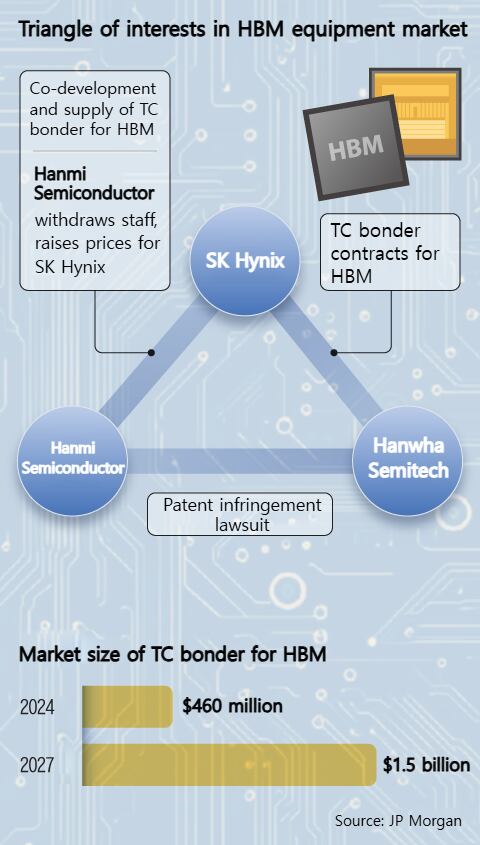

Industry insiders stated on April 21st that Hanmi Semiconductor recalled approximately 50 to 60 workers from SK Hynix’s High Bandwidth Memory (HBM) manufacturing processes. These personnel were primarily tasked with running the TC bonding machines and overseeing product output rates. Additionally, Hanmi has increased the cost of these TC bonders by roughly 25%, and started imposing charges for service and maintenance activities that used to be complimentary. It was noted that Hanmi Semiconductor collaborated with SK Hynix in developing the TC bonder back in 2017. Following this partnership, Hanmi became virtually synonymous as the primary supplier of such machinery to SK Hynix and currently holds an impressive 70% stake in the worldwide TC bonder marketplace.
The dispute started after SK Hynix ordered $30 million worth of HBM TC bonding equipment from Hanwha Semitech last month, totaling approximately 42 billion won. This transaction represents Hanwha Semitech’s initial significant delivery to SK Hynix since joining the TC bonder market in 2020. According to industry experts, this step indicates SK Hynix’s strategy to broaden its supplier network.
“It’s typical for semiconductor firms to collaborate with two or three equipment providers,” noted an industry source. “SK Hynix’s choice indicates their desire to lessen reliance on Hanmi Semiconductor.” The company reportedly seeks a seamless shift by continuing to engage with both businesses.
Apparently, Hanmi Semiconductor does not have significant concerns regarding SK Hynix choosing a new equipment provider. However, the selection of Hanwha Semitech seems to have caused some irritation for the company.
Hanmi Semiconductor has initiated multiple legal actions against Hanwha Semitech. Back in 2021, they took action against a previous staff member who moved to Hanwha, alleging violations under the Unfair Competition Prevention Act; this case was successful both during the initial hearing and upon review. Then, towards the end of last year, Hanmi launched another lawsuit targeting Hanwha due to claims of patent infringement. According to an inside source from the sector, “By increasing prices and altering services, Hanmi appears to be demonstrating its discontent with SK Hynix as it finds itself competing directly with a firm it is currently litigating.”
Even though SK Hynix is the client, they cannot easily dismiss Hanmi Semiconductor’s requests. Hanmi dominates the market, and their equipment is essential for the intricate production of HBM chips. This machinery has a substantial effect on the efficiency of chip yields. On the other hand, Hanwha Semitech seems prepared to face potential legal issues in an effort to maintain SK Hynix as a major client and will likely adapt according to how events unfold.
The escalating dispute concerning HBM production machinery stems from the sector’s significant expansion prospects. As the AI surge boosts the HBM marketplace, the TC bonder market is anticipated to expand threefold, rising from $461 million in 2024 to an estimated $1.5 billion by 2027, as per J.P. Morgan projections. An individual within the field commented, “Obtaining SK Hynix as a client essentially equates to controlling the worldwide HBM equipment segment.”
The semiconductor equipment sector is eagerly monitoring SK Hynix’s orders by the end of this month because how they distribute TC bonders between Hanmi Semiconductor and Hanwha Semitech might shape the outcome of their dispute. An informed source from within the technology industry cautioned, “It’s crucial to prevent internal strife amongst local firms so we can maintain South Korea’s dominance in the HBM market.”