Twenty-one humanoid
robots
ventured into the streets of
Beijing
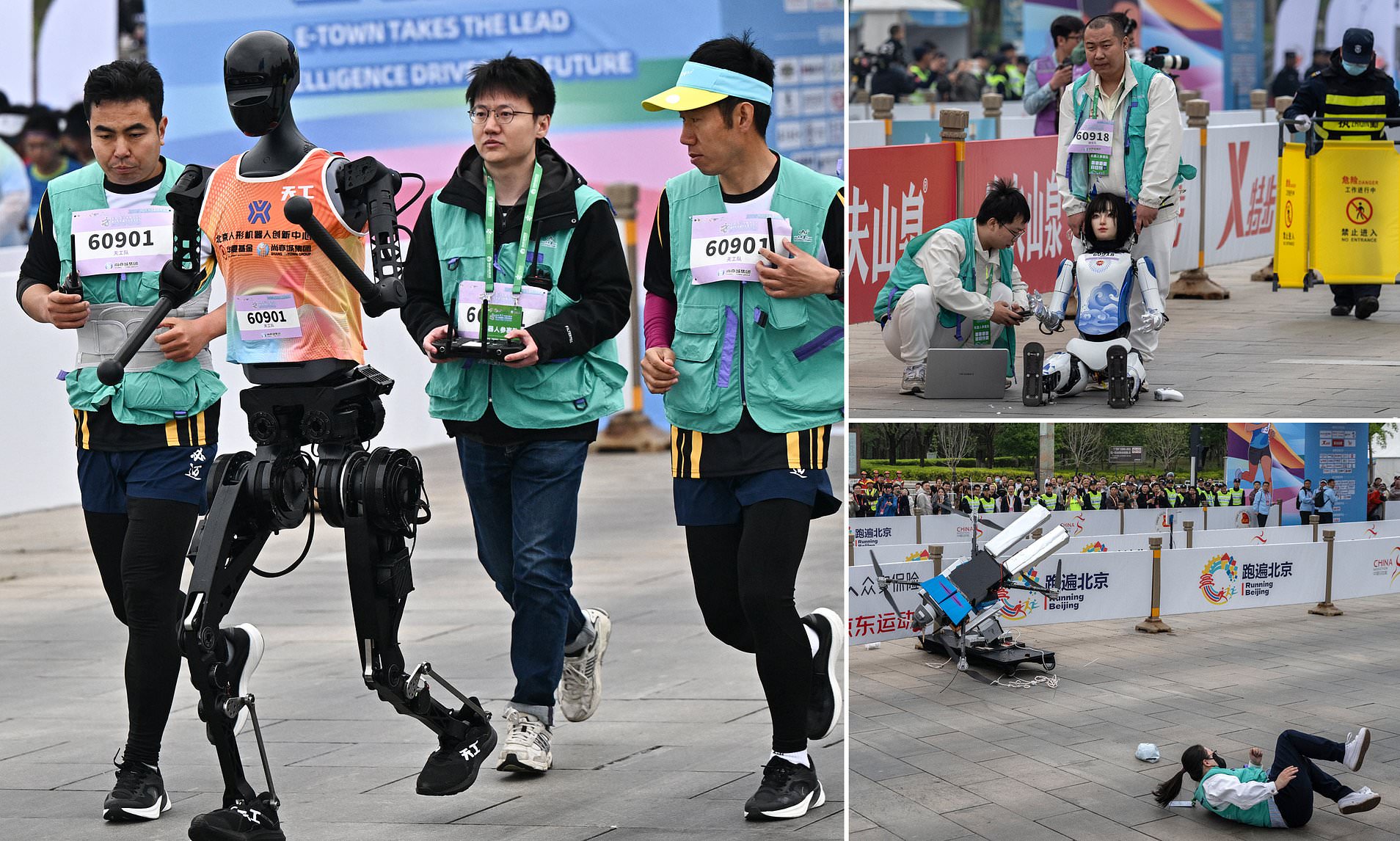
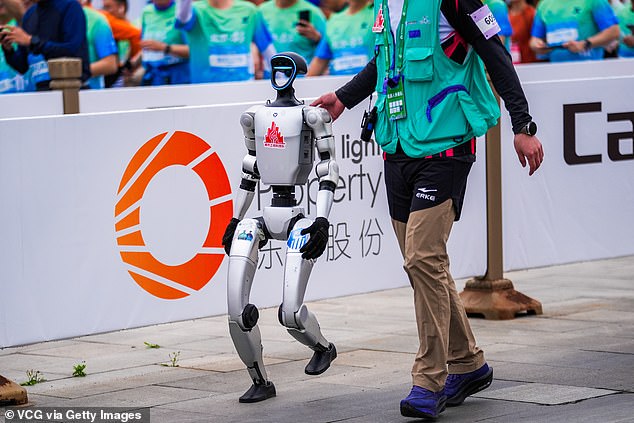
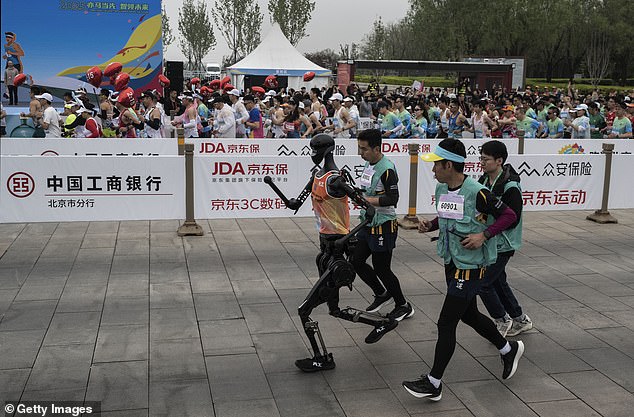
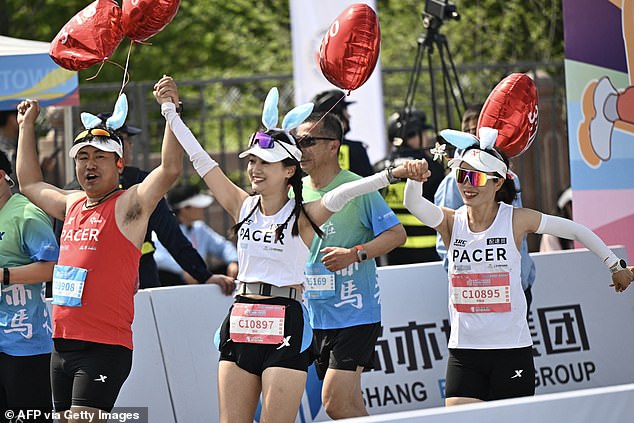
To participate alongside thousands of runners in humanity’s inaugural half-marathon against machines, yet many found it challenging to reach the finishing line.
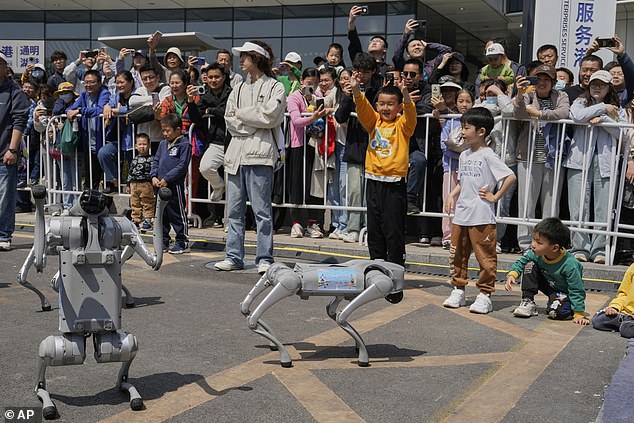
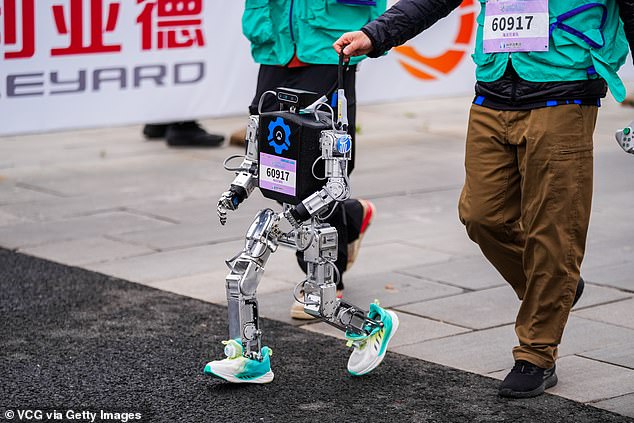
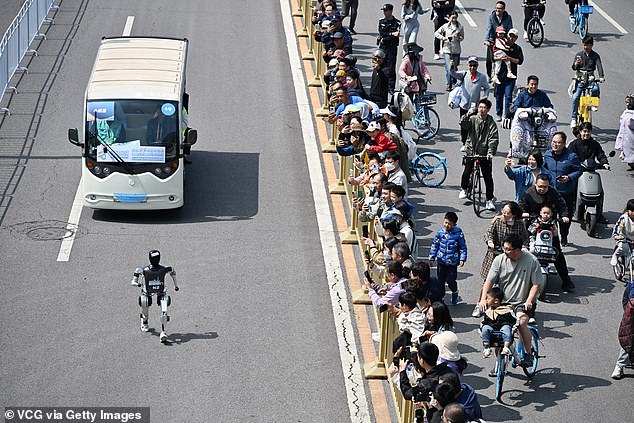
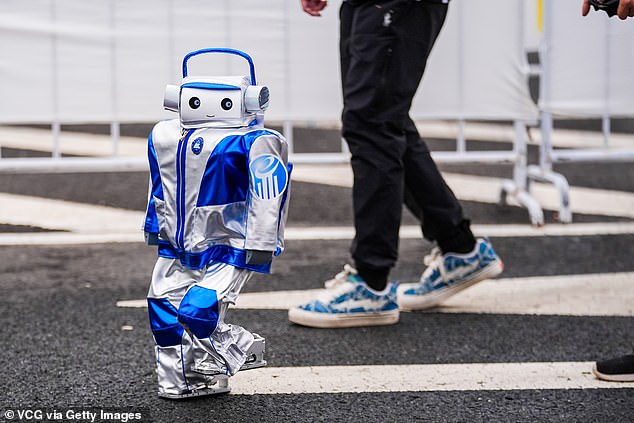
Robots produced by Chinese companies participated in the 21-kilometer event held in Yizhuang, showcasing a wide variety of forms and dimensions, with some standing under 120 centimeters tall and others reaching up to 1.8 meters.
Human participants stood alongside the road, holding their phones at the ready to capture images of each machine as they started moving for the first time.
Around 20 teams from across
China
took part, and although some robots finished the race, others had difficulties right from the start.
One smaller-sized
android
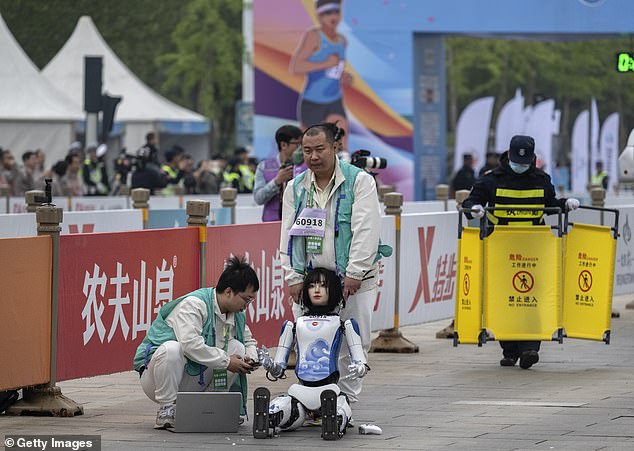
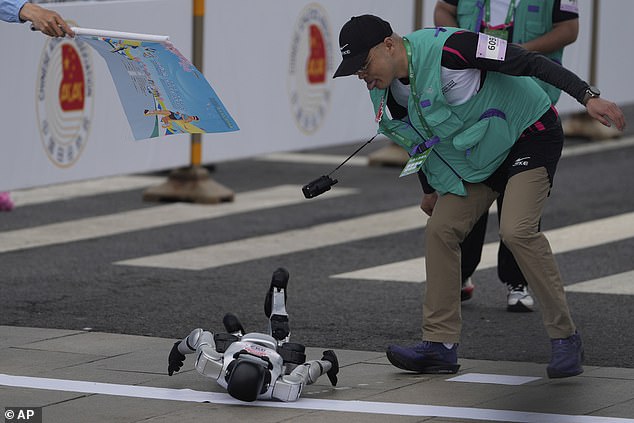
tumbled down and remained on the floor for a few minutes, until rising again amid thunderous applause.
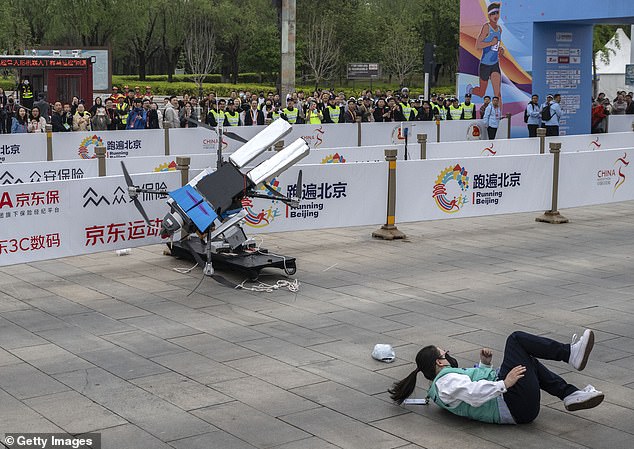
Another one, driven by propellers, zoomed past the starting line only to crash into a barrier and knock over an engineer.
Some firms tested their robots for weeks before the race. Beijing officials have described the event as more akin to a race car competition, given the need for engineering and navigation teams.
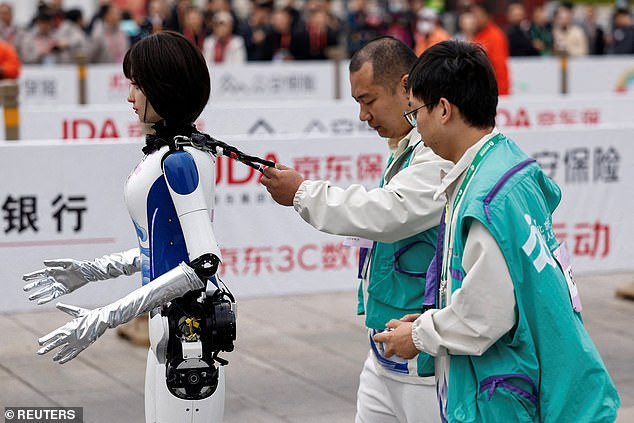
A certain business proudly claimed that their robot resembled a human being closely, featuring female-like attributes along with the capacity to blink and grin.
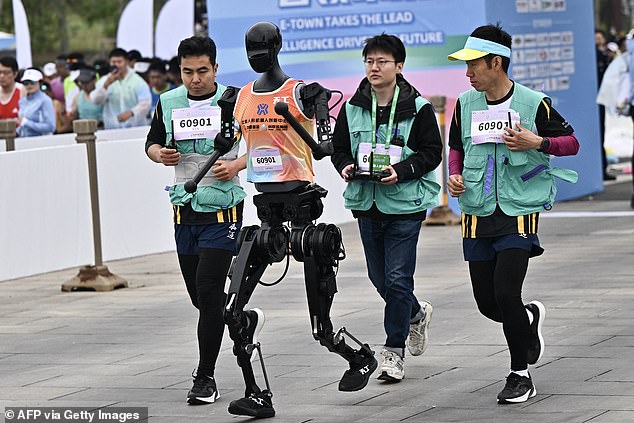
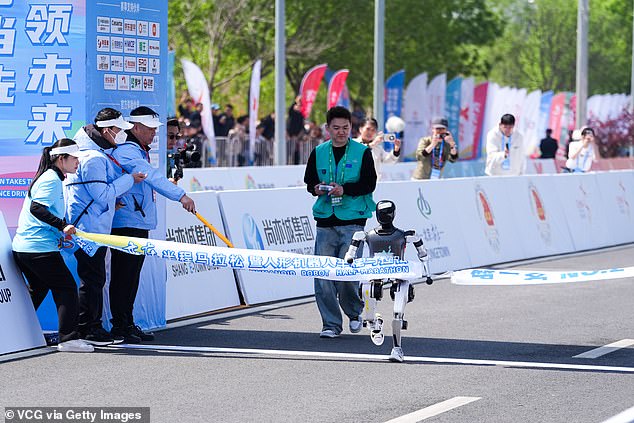
Crossing the finish line first despite a mid-race fall was the tallest droid and one of the heaviest in the competition.
Standing at 180 centimeters with a weight of 52 kilograms, the sleek black ‘Tiangong Ultra’ completed the task in two hours, 40 minutes, and 42 seconds.
The male and female champions, hailing from Ethiopia, completed the race in one hour, two minutes, and 36 seconds, and one hour, 11 minutes, and seven seconds, respectively, as reported by state media. Robots competed on distinct lanes from the human runners.
Tang Jian, the chief technology officer at the Beijing Humanoid Robot Innovation Center, which created ‘Tiangong’, stated to journalists that the company was “highly pleased with the outcomes.”
“We established three objectives for ourselves: firstly, to secure the championship; secondly, to have our single robot complete the full half-marathon—a crucial objective for us; and finally, to ensure we finished the race within the three-hour mark,” he stated.
We gathered actual running data from professional athletes and used this information to train the robot, ensuring that its walking pattern, pace, step length, and different body positions would mimic those of professional runners as accurately as possible.
According to business information provider Tianyancha, the Beijing Humanoid Robot Innovation Center, initially founded by the government, is currently under the ownership of Chinese technology corporations Xiaomi Robotics and UBTech Robotics, along with two state-owned enterprises.
One spectator Huang Xiaoyu who was there with her child said: ‘My daughter… got up really early and asked to come watch the robot marathon.
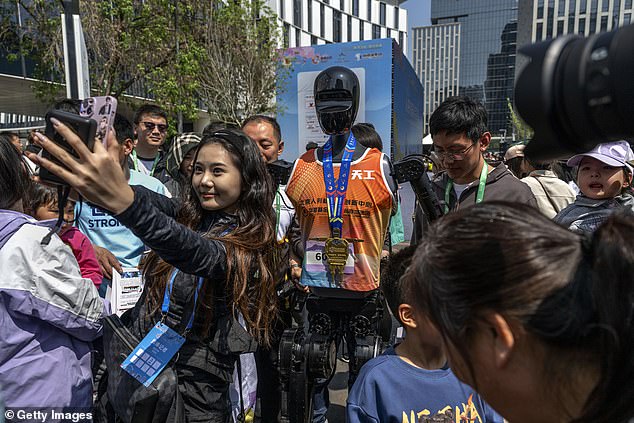
‘The experience was truly stunning—we got to witness some of the most advanced robots in our nation.’
A number of the robots moved autonomously, whereas some were controlled remotely by their engineers.
‘Stepping onto the racetrack may appear as a minor move for people, yet it represents a significant advancement for human-like robots,’ stated Liang Liang, who serves as the deputy director of Beijing E-Town’s management committee.
The engineers stated that the aim was to assess the performance and reliability of the robots, underlining that completing the course, rather than achieving victory, was their primary target.
Cui Wenhao, a 28-year-old engineer from Noetix Robotics, stated: “It’s rare for an entire industry to operate at maximum capacity over such an extensive period and range.”
It’s a significant examination of the battery, motors, structure — even the algorithms.
Kong Yichang, a 25-year-old engineer at DroidUp, stated that the competition aims to ‘establish a basis for an array of upcoming events centered around humanoids.’
China, ranking as the globe’s second-biggest economy, has aimed to establish its leadership in areas like artificial intelligence and robotics, thereby emerging as a key competitor to the United States.

In January, the Chinese startup DeepSeek garnered notice for unveiling a chatbot they asserted had been developed at a lower cost compared to those of their American rivals.
Humanoid dancing robots also won over viewers at a televised Chinese New Year special.
Even though human-shaped robots have been featured in races across China recently, this marks the first instance where they run side-by-side with people.
China is counting on investing in cutting-edge sectors such as robotics to foster new drivers of economic expansion.
However, some experts doubt that using robots for marathons accurately reflects their potential in an industrial setting.
Alan Fern, a professor specializing in computer science, artificial intelligence, and robotics at Oregon State University, stated that despite assertions made by Chinese authorities claiming the event necessitates ‘AI breakthroughs,’ the software allowing human-like robots to run has been both created and showcased for over half a decade.
‘Chinese firms have truly emphasized demonstrating acts such as walking, running, dancing, and various agile stunts.’
“Overall, these are intriguing displays, yet they fail to showcase the effectiveness of meaningful tasks or any fundamental form of intelligence,” Fern commented.