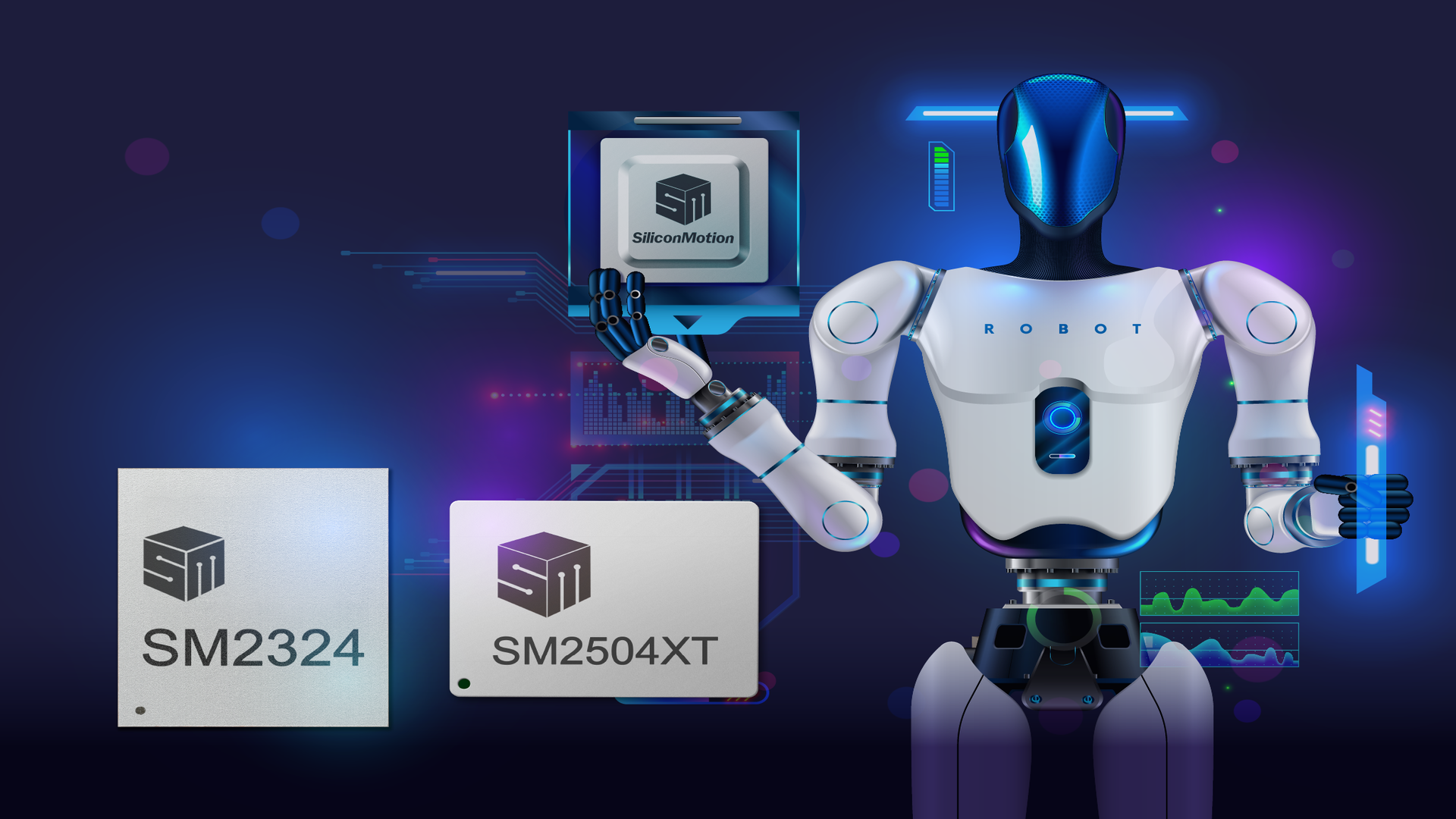
Silicon Motion SM2324: A Game-Changer in External SSD Technology
### Introduction
During the Computex 2025 event, Silicon Motion introduced the SM2324, an innovative single-chip USB4 SSD controller designed to revolutionize external storage solutions. This latest offering promises impressive capacities of up to 32TB and exceptionally high read speeds reaching 4,000MB/s, making it particularly appealing to content creators and data management professionals.
### Key Features and Benefits
#### Unmatched Storage Capacity and Speed
The SM2324 facilitates ultra-high-capacity portable drives by combining innate USB4 capabilities with an integrated Power Delivery controller. This design minimizes the component count, thereby lowering costs for Original Equipment Manufacturers (OEMs) and allowing for more compact SSD enclosures. The controller’s sequential write speeds can reach up to 3,809MB/s, contingent upon adequate cooling measures, marking a significant enhancement in speed performance.
#### Versatile Compatibility
This controller is compatible with multiple storage types, supporting both 3D TLC (Triple-Level Cell) and QLC (Quad-Level Cell) NAND flash. It also accommodates Power Delivery 3.1 standards, enabling efficient power management. The SM2324 is designed for cross-platform use, seamlessly functioning with operating systems like Windows, macOS, Linux, and supports Apple ProRes workflows, making it highly versatile for diverse user needs, from mobile filmmakers to enterprise-level data backup solutions.
### Design and Integration
#### Streamlined Manufacturing
Unlike traditional multi-chip solutions, the SM2324 is built for simplicity in production, which could lead to increased manufacturing efficiency and reduced overall production costs. However, while the single-chip approach may lower the bill of materials (BOM), it raises questions about the affordability of 32TB USB4 SSDs.
#### Compact Form Factor
The chip measures a mere 9mm by 9mm and comes with an aluminum heat spreader. This compact design makes it suitable for slim external enclosures, facilitating the creation of more portable storage devices without compromising performance or durability.
### Security Features
Security is a paramount concern in data storage, and the SM2324 does not disappoint. It includes support for AES 128/256-bit encryption, hardware-based SHA-384, a True Random Number Generator (TRNG), and adheres to full TCG Opal 2.0 compliance. Furthermore, there are optional provisions for fingerprint-based authentication, although detailed integration instructions are not yet available.
#### Enhanced Reliability
Incorporating Silicon Motion’s NANDXtend LDPC (Low-Density Parity Check) ECC (Error-Correcting Code) engine enhances the endurance and reliability for both TLC and QLC memory types, ensuring that the SM2324 provides robust and lasting performance.
### Market Implications and Future Considerations
#### Target Audience
Silicon Motion has strategically positioned the SM2324 to appeal to a wide array of users, from individuals seeking portable storage solutions to professionals requiring high-capacity backups. However, while the specifications paint an optimistic picture, the final pricing and availability of these drives remain uncertain. Factors such as NAND flash pricing, thermal management needs, and power delivery capabilities could lead to a product that caters more to specialized markets rather than mainstream consumers.
#### Conclusions
The SM2324 represents a significant advancement in the realm of portable storage technology, setting new benchmarks for both performance and power efficiency. “At Silicon Motion, we are committed to creating SSD controller solutions that prioritize both performance and energy management,” explained Nelson Duann, Senior VP of Client & Automotive Storage Business at Silicon Motion. He emphasized how the SM2324 redefines portable storage technology with its fully integrated single-chip USB4 design. This innovation reflects Silicon Motion’s commitment to assisting customers in developing faster, smaller, and more efficient SSDs for next-generation applications.
As the storage landscape evolves, the SM2324 could pave the way for a new classification of external drives, even if its final market presence hinges on numerous external factors.