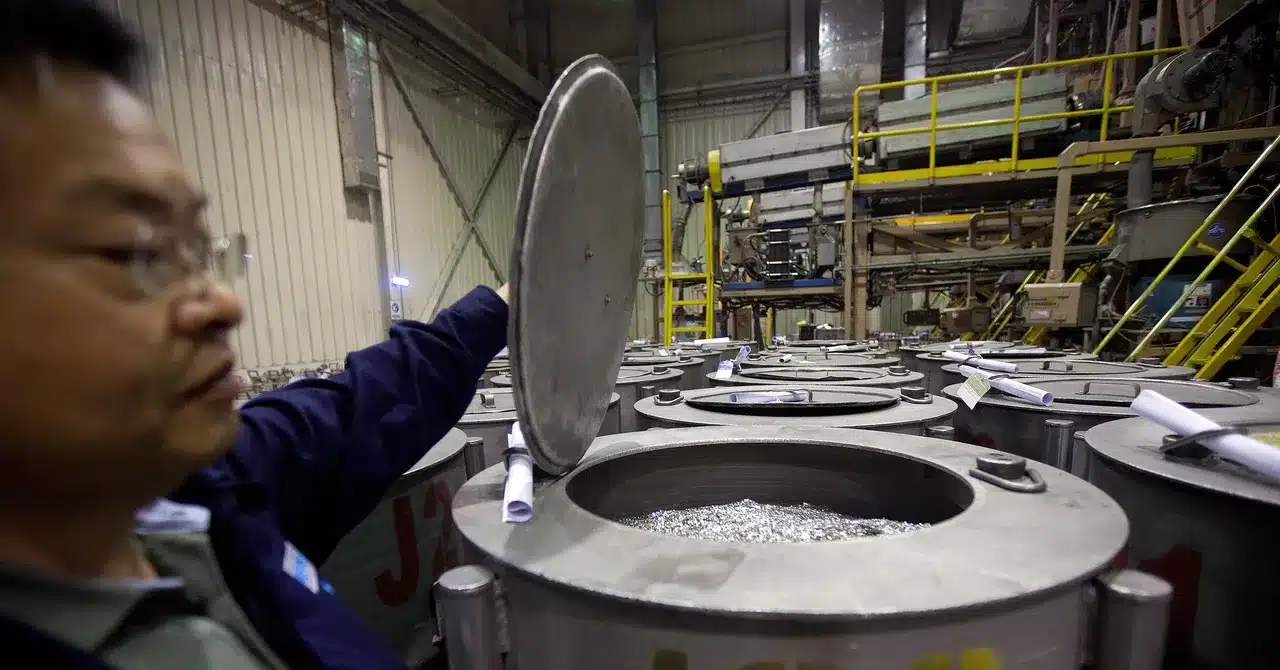
The alarm hasn’t been sounded for the general public yet, but there’s rising tension in the aerospace industry, microchip labs, and government offices. For months, yttrium—an element nearly invisible to most—has quietly taken center stage in a new global dispute. Supplies are dwindling, prices are soaring, and shipments are delayed. Even as China and the United States promised to ease tensions around rare earth minerals, the gears of advanced technology are starting to grind to a halt.
A meeting in late October between China’s President Xi Jinping and U.S. President Donald Trump raised hopes for a resolution, yet the Chinese export restrictions implemented last April are still largely in effect. China did offer a one-year break on its mandatory licensing system for exports of rare earths and related products, including those made abroad with at least 0.1% Chinese resources. This was in exchange for a similar pause on the latest U.S. restrictions affecting technology supply chains.
### A Critical Element in a Pressured Market
Despite this temporary truce, pre-existing measures remain unchanged, tightening the international supply chain. This is a real threat to technological production, raising costs and jeopardizing entire industries. Yttrium is vital to today’s tech—without it, the production of aircraft engines, high-efficiency turbines, advanced energy systems, and semiconductors would immediately stall.
Yttrium’s value comes from its ability to give thermal and mechanical strength to materials exposed to extreme conditions. Jet engine blades, for instance, must endure overheating and intense vibrations; yttrium keeps them structurally sound. The same applies to industrial chip manufacturing, where yttrium-based coatings protect machinery from chemical wear and ensure precise plasma etching. Its critical role has made yttrium a staple in modern technology and military applications.
### China’s Dominance
China dominates the global yttrium supply chain, producing the majority of it and possessing the technology and infrastructure to refine and separate it from other rare earth minerals—a highly complex process. According to U.S. statistics, the country imports 100% of its yttrium needs, with a staggering 93% coming directly from China. This heavy dependence poses significant geopolitical risks.
When China implemented export restrictions in response to U.S. tariffs, the international supply chain began to falter. Companies faced shipment delays and challenges in obtaining licenses, all while delivery times became increasingly uncertain. In the rare earth market, unpredictability often causes more damage than lower volumes; an industry reliant on just-in-time delivery can plunge into crisis with even minor delays.
The impact was swift. In Europe, yttrium oxide prices skyrocketed, soaring 4,400% since the start of the year. Aerospace firms, heavily reliant on the material, have raised alarms and urged the U.S. government to boost domestic production. The semiconductor sector is just as worried: some companies have termed the situation a “serious” threat, warning of potential implications for costs, efficiency, and production timelines. Meanwhile, gas-fired power plants, which utilize yttrium in protective coatings for turbines, are closely monitoring developments in China, though they report having yet to face disruptions.