-
Pilot shares pearl of wisdom that could save passengers pain mid-flight
-
READ MORE: Britain’s dirtiest beaches revealed – with a surprising UK county receiving the most Brown Flags for 2025
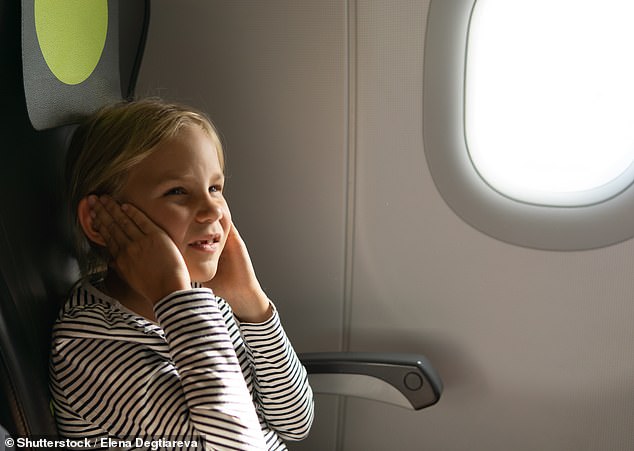
It’s a common experience for many travelers when a plane ascends or descends – causing uncomfortable pressure in the ears and an eerie sense of diminished sound.
If it happens on the way up, it can make for a uncomfortable feeling for the duration of a flight, which isn’t ideal if you’re bound for the other side of the world.
Thankfully, a pilot has shared an easy remedy that can ease painful ears for everyone from adults to children, who often suffer more than the grown-ups they’re travelling with.
During normal ascent and descent, there’s tricks that can help open the ear’s Eustachian tube – which runs from your middle ear to the back of the nose – to allow the pressure in the inner ear to equalise with that outside the ear.
eSIM travel company Airalo
sought the advice of pilot William Hosie, who explained exactly why so many people suffer on flights.
He said: ‘
As you ascend or descend in the aircraft, the cabin pressure varies.
When the plane is at 35,000 feet, you’re breathing air in the cabin as if you’re at 6,000 feet.
‘The air is thinner and the air pressure is less, which is why some people have problems with toothache, and of course ears.’
The first step should be gently blowing the pressure out from the ears.
How to do it? Simply squeeze the nose with a finger and thumb, close your mouth and start to blow slowly until your cheeks are puffed out.
Hosie issues a warning, stating not to get overly excited as it might damage the sensitive eardrums of the passengers. He explains, “A ruptured eardrum can be extremely painful and may require several weeks for recovery.”
He recommends that prevention is preferable to finding a cure later, noting that merely bringing along a boiled sweet or lollipop might prevent ear-popping altogether.
Parents traveling with infants and young children who might not comprehend ear discomfort could find some relief by offering them a bottle of milk or a pacifier, he mentioned.
These factors may lead to the widening of the passage at the rear of the nasal cavity, enabling the air pressure to balance out and reducing the discomfort.
In 2018, passengers aboard a Ryanair flight traveling from Dublin to Croatia were forced to make an emergency landing in Frankfurt when the cabin experienced a loss of pressure.
After the incident, 33 passengers received treatment at the hospital, with several experiencing earbleeding.
Last year, Delta Airlines passengers experienced bursting eardrums and nosebleeds when their aircraft rapidly descended due to an unexpected loss of cabin pressure.
The passengers on a flight from Salt Lake City, Utah, to Portland, Oregon, experienced a loss of cabin pressure followed by a quick descent of the aircraft.
The aircraft encountered the problem at an altitude of 10,275 feet. During a period of four and a half minutes, the plane dropped from 33,975 feet to 25,075 feet, descending approximately 33 feet every second.

A passenger named Jaci Purser mentioned that she experienced a sensation akin to her ear being pricked due to the high pressure inside the cabin. She recounted, “I grabbed my ear, and when I withdrew my hand, it was covered in blood.”
Airplanes typically operate at heights exceeding 30,000 feet, adjusting their elevation to reach this level at a pace of approximately 2,000 feet per minute during ascent or descent.
At an altitude of 30,000 feet, the external air pressure drops to approximately one-third of what it is at sea level, leading to gas expansion.
To ensure passenger comfort and safety, airplane cabins are maintained at a pressure equivalent to an elevation of 5,000 to 8,000 feet above sea level, which is below the atmospheric pressure found at ground level.
That’s why, when you bring a packet of chips on board, it seems ready to explode due to pressure changes. Similarly, upon reaching your destination, you might find that your shampoo has leaked all over your luggage.
This pressurization also assists in maintaining an oxygen level that is safe for human beings.
Typically, during ascent, the air inside the middle ear maintains higher pressure compared to the airplane’s cabin since it retains the initial pressure from takeoff. Consequently, this causes the eardrum to protrude outward.
While climbing, actions such as yawning, speaking, or consuming food and drinks lead to the equilibrium of pressure within the inner ear with the cabin pressure experienced during cruising altitude.
As the aircraft lands and starts descending, the air pressure inside the cabin gradually increases to match that of sea level. However, your inner ear still maintains the lower pressure from cruising altitude, pushing the eardrum inward and resulting in muffled hearing—a sensation many passengers encounter during flights.
Read more