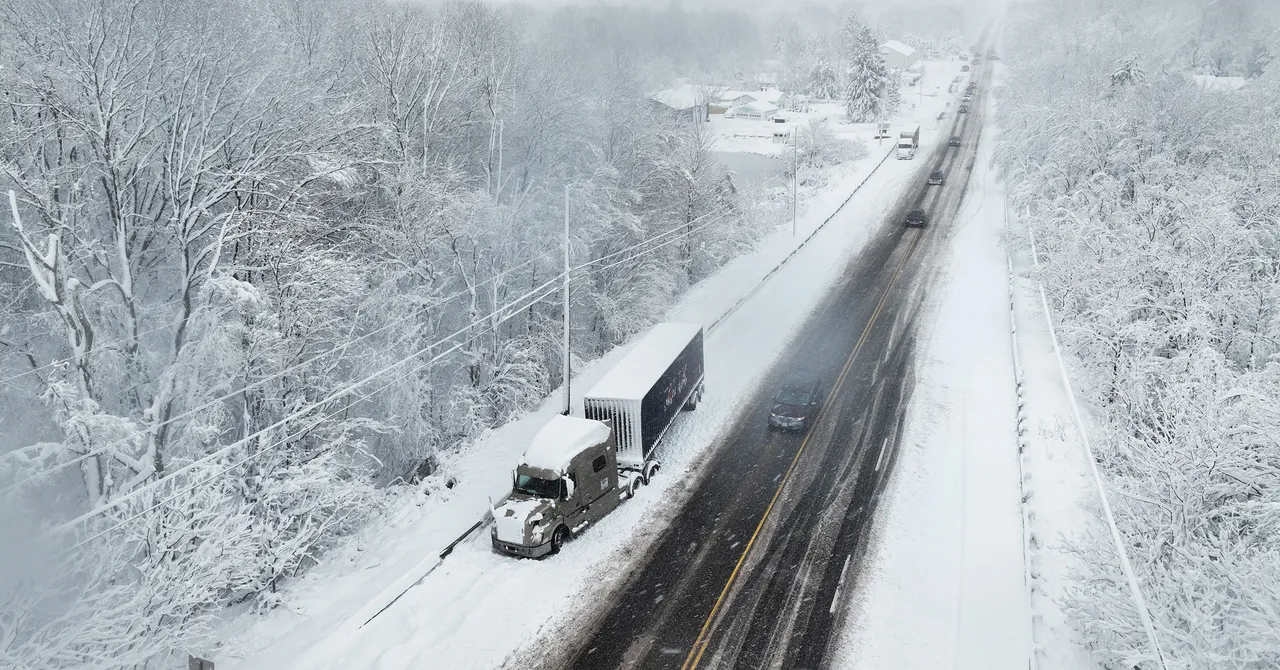
Here it comes. Up to two-thirds of the U.S. is bracing for a weekend filled with serious snow, cold, and ice, potentially causing major disruptions from Texas to New York City. Grocery stores, logistics experts, warehouse operators, and trucking companies have been preparing for days. The exact impact on the supply chain—and the retail shelves reliant on it—remains to be seen.
On one hand, this is just another winter event. Snowstorms are typical, and the freight industry has a solid game plan. “If you’re a retailer, this happens all the time,” says Chris Caplice, the chief scientist at DAT Freight & Analytics. “For those in the supply chain, this is just another Tuesday.”
On the flip side, the places affected by this storm and its extensive reach add an extra layer of difficulty. “This one’s kinda tough because you don’t often get many snowstorms in the states being affected,” explains Chris Long, the executive vice president of operations at Capstone Logistics, a third-party logistics firm. Southern states like Texas, Oklahoma, and Arkansas are usually set up to manage hurricanes, with distribution centers ready to supply essentials like generators, water, and plywood. However, if roads in these areas freeze for several days—what Long calls “the worst case scenario”—shoppers might face shortages of perishable goods, including food and medicines.
To mitigate this, retailers have spent recent days pre-positioning high-demand items—like snow shovels, bottled water, canned goods, and de-icer—at local distribution warehouses for quick access to store shelves. Large trucking companies are strategically pre-positioning vehicles and personnel, while independent truckers have likely hit the brakes.
Next week, as everyone works to recover from the storm’s aftermath, freight prices may surge, says Caplice, as companies scramble to reboot the supply chain. However, retailers have likely anticipated such fluctuations; it’s winter, after all. This year, the uncertainty surrounding tariffs and immigration in the freight industry is a much larger concern, according to Caplice. “This will be a blip.”
Regardless of what the next few days hold, companies are likely better equipped to handle this than they were before the pandemic, when lockdowns threw global supply chains into chaos. “When I first got into the industry, it was all about ‘just-in-time,’” says Long, who has years of experience in the grocery sector. The pandemic shifted the focus for retailers and their freight partners toward stocking up and bracing for the unexpected. “We’re in a way better place,” he adds.