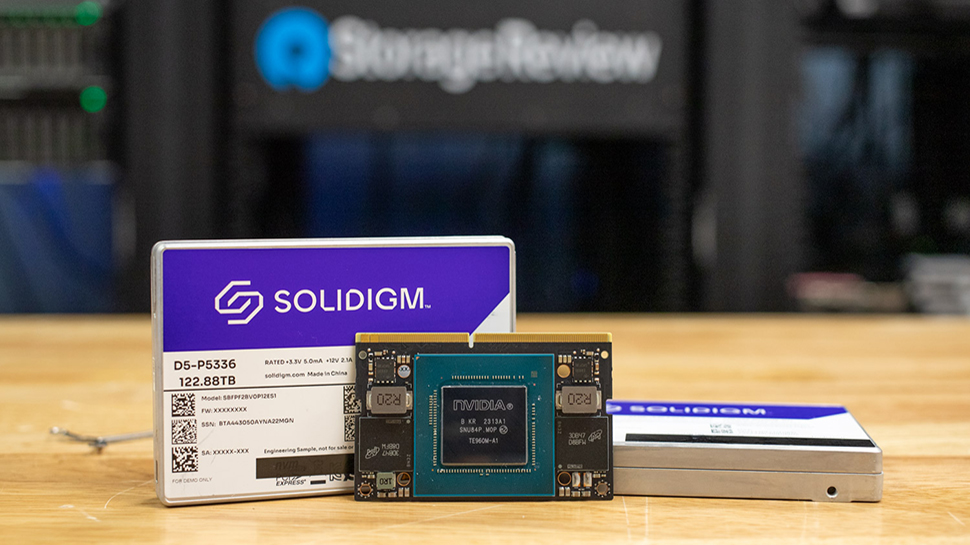
Solidigm’s 122.88TB SSD: A Game Changer in Storage Density
Solidigm has unveiled its latest innovation, the D5-P5336 SSD, boasting an impressive capacity of 122.88TB. While it may not break speed records, this SSD shines in its density, making it a standout option for enterprise storage solutions.
Priced at $12,400, the D5-P5336 is not for the faint of heart. However, its high capacity means significant savings in physical rack space and energy consumption, potentially offsetting the upfront cost. As Solidigm positions itself at the forefront of high-capacity storage, it’s prepared to encounter competition—not just in speed but also in scale.
Looking Ahead: The 246TB SSD
Experts anticipate the introduction of a 246TB SSD by 2025, which could more than double the current maximum storage available. Solidigm’s SSD is engineered for density, achieving read speeds of up to 7GB/s and write speeds of 3GB/s, leveraging PCIe Gen4 technology. This makes it particularly suited for workloads that thrive on high sequential reads, including AI pipelines, CDN services, and object storage.
Performance and Endurance Insights
Despite its impressive capacity, real-world benchmarks reveal that the D5-P5336’s performance doesn’t always match expectations. In high-concurrency scenarios, it often matches or slightly lags behind its 61.44TB predecessor, and it trails Gen5 options like Micron’s 61TB 6550 in write-heavy tasks. Additionally, this SSD offers a modest endurance rating of 0.6 DWPD, equivalent to 134.3 PB written over a five-year warranty period. This makes it better suited for read-heavy environments rather than mixed or write-intensive applications.
Solidigm’s approach focuses on optimizing storage efficiency—maximizing storage per watt, rack unit, and dollar. While the D5-P5336 may not be the top performer in raw speed, it plays a vital role in modern data center architecture, which increasingly emphasizes density and efficiency.
The Evolving Competitive Landscape
The competitive landscape is rapidly changing, with new entrants like the lesser-known Chinese brand DapuStor also launching a 122.88TB SSD. Although information on DapuStor’s long-term reliability and support remains sparse, this development signals a growing interest in ultra-dense enterprise SSDs from beyond the traditional big players.
As the tech world anticipates even larger capacities, questions linger: Can NAND technology and controller efficiency keep pace with these ambitious advancements? Furthermore, will these capacity increases yield meaningful performance enhancements?
As data centers prepare for an AI-driven future, the answers to these questions could shape not only the future of SSDs but also the trajectory of storage technology as a whole. Stay tuned to see how these developments unfold.