AUSTIN (KXAN) — There are a few, small touches of Venezuela around Diego’s family’s house in the Houston suburbs. Family photographs capture memories from weddings and events in their home country. A mounted key ring near the door spells out the country’s name and is painted yellow, blue, and red – the colors of the flag.
However, when Diego thinks of Venezuela, he said he thinks of two different places. First, he thinks of the country where he was born, raised, attended medical school and became a doctor. He said, eventually, “that country didn’t exist any longer. It didn’t exist in every single way possible.”
In 1999, Venezuelan voters elected President Hugo Chávez to office. According to media reports at the time, Chávez
campaigned on a promise to stamp out poverty
and began to use a windfall of hundreds of billions of dollars in oil money to fund government-run improvement initiatives, such as public housing and health clinics. The country’s constitution and its flag changed. By the late 2000s and early 2010s, reports show
a global drop in oil prices – along with accusations of government mismanagement and corruption in the next presidency of Nicolás Maduro
– pushed the country
into a political and economic crisis that plagues it today
. Since then, the
United Nations refugee agency reports millions of Venezuelans have fled
the country, amid a collapsing economy and a contested election.
“You kind of become, sort of, a foreigner in your own country,” Diego said. He eventually left on a temporary visa in Germany to further his medical training, although he said he always planned to return home to Venezuela. In 2014, he got a call from his father that, he said, changed his life.
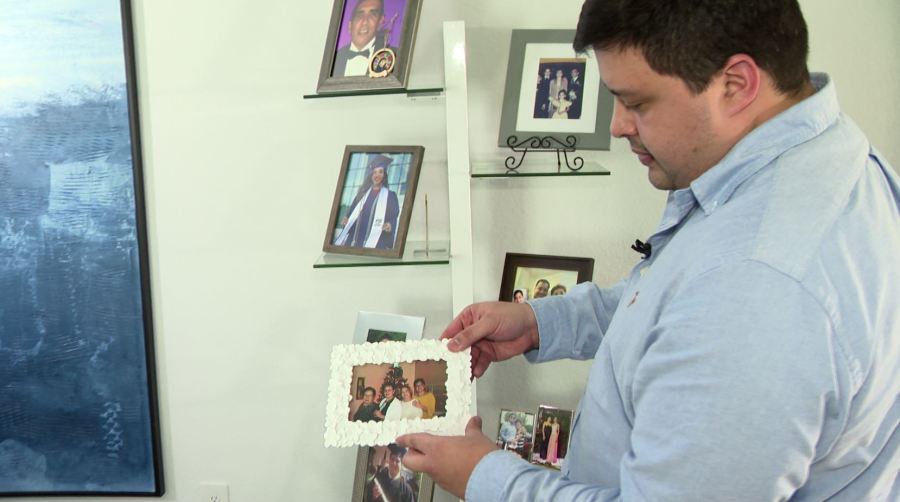
“Out of the blue, your dad calls you and tells you, ‘Look, I’ve got to flee because they were going to put me in military prison. I am a terrorist in the eyes of the Venezuelan state,’” Diego said he remembers.
Diego’s biological father worked with the political opposition to Chávez and Maduro – a woman named María Corina Machado, who has since become a widely-known political figure.
After the call in 2014, Diego said he wasn’t sure what to believe but worried that anyone with connections to his father could potentially be in danger. KXAN investigators chose to omit Diego’s surname for this reason.
At the time, German immigration laws required him to return to his country of origin in order to be considered for a longer stay.

“So, what are you going to do? You know, OK, well, I cannot go back there,” he said. “There was no place for me to go back to.”
So, Diego said he connected with a relative in the United States and started with a temporary visa, before applying for asylum. Then, he said he waited to present his case to the U.S. government. As of April 2025, he said he was still waiting for an outcome.
Significant amount of time
Diego is one of more than a million people nationwide seeking asylum and waiting, sometimes for years, for their cases to be processed.
The American Immigration Lawyers Association reports a roughly six-year wait time for the processing of an affirmative asylum – where the applicant is seeking protection and the government is not pursuing a removal case against them. The U.S. Citizenship and Immigration Services, or USCIS, processes these cases.
According to the same association, people are waiting more than four years for a defensive asylum claim – meaning the government has initiated removal proceedings against them and their cases have landed in immigration court. In fiscal year 2024, the Executive Office for Immigration Review – the branch of the Department of Justice responsible for adjudicating immigration cases – reported nearly 1.5 million pending asylum cases nationwide.
Laura Flores-Dixit is a managing attorney at American Gateways, which represents low-income, immigrant communities in Central Texas. She said long wait times do impact people’s cases.
“It’s very possible that the information and that the evidence in their case has grown stale. It’s also possible that there could be changed circumstances in their country of origin,” Flores-Dixit said. “However, at this point, they’ve now established their lives here and have been living here for a decade, right?”
A line graph showing the number of cases pending in immigration court each year. The graphs reveals the backlog in courts across the country, in Texas and in the San Antonio over time. This graph was created using data from the Transactional Records Access Clearinghouse, a nonpartisan and independent research organization specializing in data collection and analysis on federal enforcement, staffing, and spending. (KXAN Interactive/Christopher Adams)
She said the backlog of cases for people seeking asylum or other legal protections against removal has been growing for nearly a decade – her entire career as an immigration attorney.
In 2015, U.S. immigration courts faced just under a half-million pending cases, according to the Transactional Records Access Clearinghouse – a non-profit organization at Syracuse University collecting and analyzing government records.
By 2024, TRAC reported a record-high of more than 3.7 million pending cases.
As of March 2025, the backlog had dropped just a bit, to around 3.6 million.
Texas has the second-largest backlog in the country, after Florida, at around 465,000 cases pending this year.
Flores-Dixit said cases from the Central Texas area seem to be moving more quickly through San Antonio’s immigration court, which handles most cases from the Central Texas region. TRAC reports around 116,000 pending cases in this particular court this year.
However, she said American Gateways is concerned about a growing backlog at an immigration court about 60 miles southwest of San Antonio. The Pearsall immigration court now processes cases of people held at several immigration detention centers in the area.
“We’re talking about people who have been detained at times for six and nine months without even ever having a preliminary hearing,” Flores-Dixit said. She noted that they are seeing a rise in detained individuals asking to “self-deport.”
“These are people who may have been living here for a significant amount of time, but because they have no criminal history — have no experience in being incarcerated, which is what this truly is — prefer to simply leave, as opposed to fighting their day in court,” she told KXAN.
Crossings and court impact
As the court backlog climbed to that record-high in 2024, President Donald Trump campaigned on the promise of “making America safe again” and launching the “largest deportation program in American history.”
Within days of being inaugurated,
He enacted the Laken Riley Act into law.
, mandating federal imprisonment for undocumented migrants charged with theft, burglary, or crimes resulting in death or significant physical harm.
In February, Secretary Kristi Noem of the Department of Homeland Security launched an international advertising campaign urging immigrants to “voluntarily deport themselves.”
“If you are residing here unlawfully, we will locate you and remove you from the country. You will not be allowed back. However, if you depart voluntarily at this time, you might have a chance to come back later and experience our freedoms as well as pursue the American Dream,” Noem stated in the video.
Last week, the
The Trump administration announced it would contribute payment.
up to $1,000 for travel expenses related to immigrants voluntarily leaving the country. Advocates for migrants advised those thinking about this option to seek counsel from an immigration attorney.
According to data from U.S. Customs and Border Protection, crossings at the U.S. border with Mexico have fallen sharply in recent months.
For perspective, from late 2021 to the end of 2024, the Biden administration had a monthly average of almost 187,000 encounters — 94% more than the around 11,000 monthly average in Trump’s first two months back in office.
In President Trump’s initial term, undocumented migration across the southern border decreased significantly once he took office—much like what was observed at the beginning of his subsequent term—based on statistics from U.S. Customs and Border Protection. However, this trend reversed as numbers started climbing consistently each month until they dipped during the pandemic period. The figures climbed back up again in the months leading up to when he exited the presidency.
It’s unclear how this latest decrease will impact the backlog in the immigration system and the courts.
Sheriffs and other seasoned border law enforcement officials informed KXAN.
There are numerous elements to take into account.
“We’re only into the first 100 days, so there’s still a lot of waiting and seeing to do,” according to retired Sheriff Clint McDonald.
Previously, McDonald worked at the border and boasts 42 years of experience in law enforcement. Currently, he holds the position of executive director for both the Southwest Border Sheriff’s Coalition and the Texas Border Sheriff’s Coalition.
“Fixing the immigration issue won’t happen quickly,” McDonald stated. “This matter hasn’t received proper attention before; every government has passed this buck to their successors. Resolving this requires cooperation between both chambers of Congress and the support of the President.”
Stymied at every turn
Mark Kinzler, an Austin-based immigration lawyer, mentioned that this heightened emphasis on deportation is causing concern among both his present and former clients regarding their legal standing “to an extent we’ve never witnessed before.”
In his immigration law firm, the waiting area is adorned with children’s literature and playthings, alongside a bulletin board displaying photographs and inspiring quotations. Kinzler mentioned that his legal team strives to provide their clientele with clear guidance; however, he admitted that gauging the pace at which cases progress—whether swiftly or gradually—is frequently challenging. He pointed out that this variability hinges largely on the presiding judge or the specific caseload involved.
So, some individuals have been waiting for a decade, while others will be attending next week,” he stated. “It doesn’t follow any particular logic.
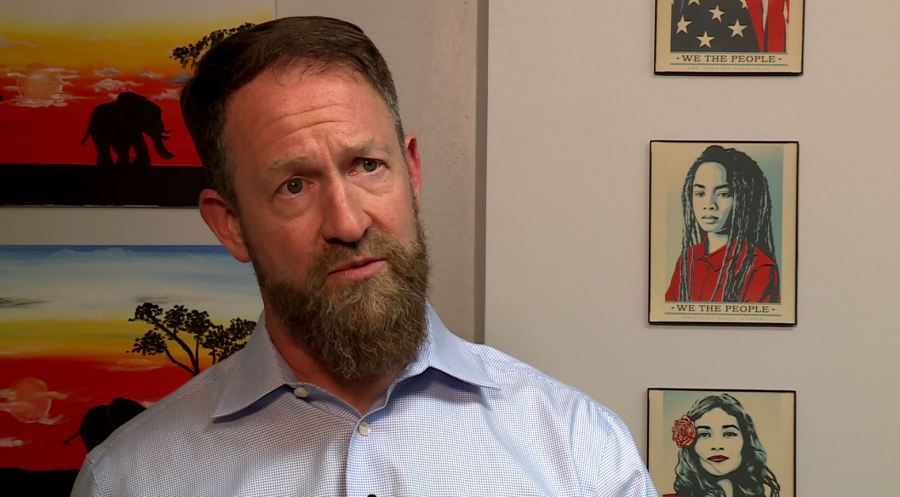
Kinzler characterized certain clients as stuck in “limbo,” awaiting the government to submit a particular form to either transfer their case to immigration court or advance it further. Additionally, he mentioned that alterations in federal policies could impact the progression rate of these cases.
“It’s very Kafka-esque, right?”
A memorandum issued by Department of Justice officials in April outlined a strategy to expedite proceedings in immigration courts by permitting judges to dismiss specific asylum cases without an official hearing. The document stated that “decision-makers should indeed undertake every necessary measure to swiftly conclude cases within their caseloads that lack feasible legal avenues for relief or defenses against deportation.”
The drive to clear the case backlog is occurring as some immigration courts nationwide grapple with staffing shortages.
According to a 2023 report from the Congressional Research Service, adding another 700 judges would be necessary to eliminate the case backlog by 2032, which is roughly equivalent to doubling the current judiciary workforce.
During the president’s first few months in office, the Trump administration
allegedly dismissed over ten immigration judges and administrative personnel
.
We can’t provide every individual with a hearing because doing so would realistically require 200 years,” the president shared on his platform Truth Social on April 22. “It would necessitate conducting hundreds of thousands of hearings for the multitude of individuals being expelled from our country. This kind of undertaking is simply unfeasible.
The
The comments were part of an extensive post made by the president.
critiquing the legal hurdles his deportation efforts have faced, including
a recent Supreme Court decision temporarily blocking some deportations under the Alien Enemies Act of 1798
.
“My team is fantastic, doing an incredible job, however, they are being stymied at every turn by even the U.S. Supreme Court, which I have such great respect for, but which seemingly doesn’t want me to send violent criminals and terrorists back to Venezuela, or any other Country, for that matter,” Trump wrote.
In response, leaders with the
American Immigration Lawyers Association
and other advocacy groups have publicly aired concerns about due process being undermined. Kinzler said the feuding between the executive branch and judicial branch over immigration issues raises larger constitutional questions that have people in his industry concerned.
“What this has led to is confusion for us when advising our clients. Since we aren’t aware of which rules the government is currently enforcing, we cannot accurately forecast future developments,” he explained.
The way forward?
Jennie Murray, who leads the National Immigration Forum, stated that surveys indicate most Americans favor concentrating on resolutions. Nonetheless, she mentioned that in recent times, the debate about immigration—and particularly border control—has served as a “political pawn” hindering prompt answers to the pending issues or substantial modifications to the current framework.
The National Immigration Forum characterizes itself as an organization promoting the importance of immigrants within the nation. It brings together moderate to conservative religious figures, law enforcement officers, national security specialists, and business executives who collectively agree, albeit for various reasons, that establishing a fair and prosperous immigration framework is essential.
“We absolutely are first in line, honestly to say, ‘Of course, we need to have enforcement. Of course, we need to have security.’ Every country should be allowed to secure their borders – to remove violent criminals who don’t belong in their communities. So, money does need to be spent on that, and we always have. The last nine administrations, without fail – Republican or Democrat – have put money into that,” she said. “You can have enforcement, but you also need to have personnel, technology, and then you need to robustly start to update the judicial system.”
She stated that the forum wishes to observe a “greater equilibrium in spending” regarding immigration issues—this implies redirecting funds away from enforcement towards resources such as staff, technological advancements, and roles filled by immigration judges or asylum officers.
Murray stated that the asylum system was never designed to handle the number of individuals seeking refuge and security in the United States that we’ve witnessed recently.
“We required a complete revamp of our system, but we haven’t done it yet. We’re still waiting for long-overdue upgrades that necessitate action from Congress. The key point is that we faced a humanitarian crisis without being prepared to address it,” Murray stated.
Murray highlighted that the Forum aims to inform individuals about the significant influence migrants exert on our economies and communities.
“We need to be able to speed things up so that we can have a more efficient and humane process,” she said.
Flores-Dixit from American Gateways concurred that additional funds should be allocated to improve the infrastructure and recruit staff to address the pending caseloads, and she also mentioned that various “innovative approaches” would be essential for thorough reforms.
“As we keep moving resources toward processing—this approach does not address the core problem, which is that both our immigration system and existing laws are flawed and fail to align with the present requirements and population dynamics of the United States,” she stated.
Diego’s future
Diego informed KXAN investigators that he understands the complexity of his situation. He mentioned at some stage that he departed the U.S. to go back to Europe seeking better prospects for advancing his medical profession. Additionally, he has been monitoring whether he might still qualify for a protective status called Temporary Protected Status, often referred to as TPS.
The Department of Homeland Security might grant Temporary Protected Status (TPS) to individuals from specific foreign nations because of continuing armed conflicts, natural disasters, disease outbreaks, or other exceptional and short-term circumstances that make it unsafe for those nationals to return home. According to a report issued in September 2024,
Almost 350,000 Venezuelans received support through Temporary Protected Status (TPS).
, with Texas reporting the second-highest number of TPS recipients residing in the state, following Florida.
Earlier this year, the
The Trump administration declared intentions to remove this status for numerous Venezuelan individuals.
This means they will lose their temporary protection from being deported and won’t be able to obtain work permits anymore.
The DHS mentioned partly due to “significant considerations regarding severe national security, border enforcement, public safety, immigration policies, as well as economic and societal welfare issues stemming from unlawful migration of individuals from Venezuela.”
However, in March,
A federal judge halted this proposal.
,stating that the government could not pinpoint any “actual opposing harm from maintaining TPS status for Venezuelan recipients.”
Regarding Diego, he expressed his desire to return to medical practice at some point. In the interim, he has been employed in the insurance sector and makes an effort to maintain an optimistic perspective on what lies ahead. He shared with us that he views the United States as a wonderful nation and recognizes that navigating its systems requires patience.
He informed us that he thinks the wait will prove worthwhile.
I simply prefer to believe that this situation will eventually improve, and all I have to do is hang on — grip tightly, really tightly,” he stated. “Once the storm has passed, I am convinced that, although maybe not during my lifetime, future generations such as my children and grandchildren might benefit from something truly remarkable and within their reach.
Christopher Adams, the KXAN Digital Data Reporter, along with Photojournalist Jordan Belt and Investigative Photojournalist Richie Bowes,
,
Wendy Gonzalez, who serves as the Graphic Artist; Josh Hinkle, heading up Investigations & Innovation; photojournalist Tim Holcomb; digital special projects developer Robert Sims; digital director Kate Winkle; along with WFLA bilingual digital producer José Acevedo Negrón have all contributed to this report.
Copyright 2025 Nexstar Media, Inc. All rights reserved. This content must not be published, broadcast, rewritten, or distributed.
To stay updated with the most recent news, weather forecasts, sports updates, and live streams, visit KLBK | KAMC | EverythingLubbock.com.