Horses: A Controversial Take on Video Game Censorship
The Game That Sparked Debate
Horses has become the poster child for the ongoing battle over video game censorship and the definition of art. After facing bans from Steam and the Epic Game Store, this narrative horror game has risen to bestseller status on GOG.com, rallying gamers from all backgrounds in its support. However, having played it myself, I believe Horses doesn’t fully deserve all the fuss—whether it’s the bans or the rave reviews.
Collaboration Behind the Scenes
This game is a joint effort between indie studio Santa Ragione and Italian filmmaker Andrea Lucco Bolera. Bolera wrote the story, acted in, and directed the FMV cutscenes, while Santa Ragione focused on the technical aspects. The game is relatively short, taking around three to four hours to finish. However, I found myself wanting it to end much sooner.
A Look at the Gameplay
In Horses, you embody Anselmo, a 20-year-old slacker sent to a farm by his father to learn the value of hard work. Under the watchful eye of the farm’s domineering owner, you’re assigned various chores that involve just a click of the mouse—watering the garden, feeding the dog, and tending to a herd of the titular horses, who are depicted as naked humans wearing horse masks secured with collars. Over 14 days, Anselmo experiences the farm’s dynamics, his master, and the extent of suffering both he and, by extension, the player can endure.
The Humor Factor
In all the discussions surrounding this game—particularly about its bans and its narrative horror elements—I’ve noticed little mention of its humor. After reviewing the content warnings and bracing myself for the game’s more sinister moments, my initial reaction was to laugh out loud.
Exploring the graveyard, I discovered deceased horses humorously named Bojack and Artax. Next, I encountered a dog whom I attempted to pet—a nod to the developer’s apparent commitment to the age-old game design mantra: “if dog, must pet.” Of course, this dog growls at you, and to make matters more absurd, he’s also a human in a mask.
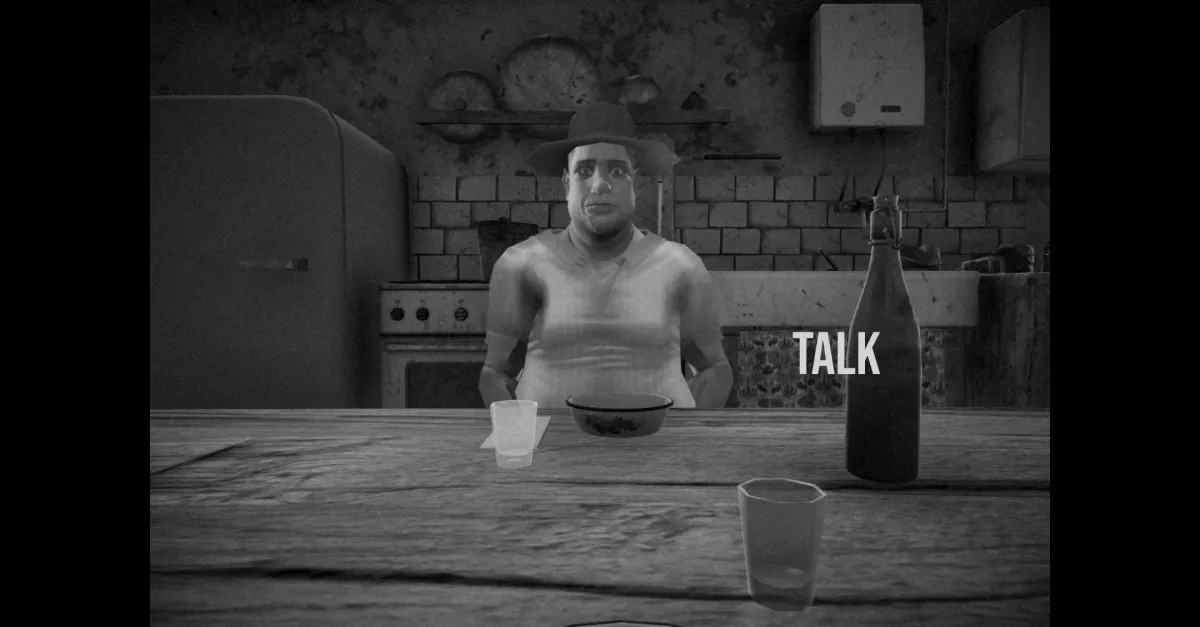
The first week was filled with laughter, thanks to the FMV elements and the charming lo-fi graphics and animations. When the farmer speaks, the game zooms in on his immobile face, creating an eerie effect. Anselmo’s choices are represented through thumbs up or down buttons, reminiscent of hospital pain charts, as his unblinking face shifts with your selection. During a hilarious horse race against the farmer, using the WASD keys made it appear as if the human beneath me was realistically reacting to my movements.
Even the explicit scenes gave me a chuckle. Due to certain design choices, these moments lack graphic detail. The depiction of horse sex resembles mannequins awkwardly bumping their pixelated bodies together. And when the farmer is caught watching his dog and a horse, his overly animated gestures unintentionally reduce the scene’s seriousness. Meanwhile, on Steam, similar games showcase explicit content completely uncensored.
A Mixed Message
Despite the unintended humor, the comedy undermines the game’s intended message. The image of horses engaging in base instincts aims to illustrate their dehumanization, yet the outdated graphics transform moments of horror into farce. It’s common for people to laugh in inappropriate situations, but the humorous tone created an ironic disconnect from the intended emotions.
Brutality as a Narrative Device
As each day passed in the game, increasingly brutal moments emerged like jump scares. Instead of disturbing me, it felt like an overused comedic routine. Using shock for shock’s sake is often deemed ineffective in storytelling, and that’s exactly the vibe I got from many scenes. I quickly grew bored, which may have been the director’s intention—to show how constant ugliness turns into background noise. However, that occurred only when players have no choice, and Horses offers very little agency. Even when Anselmo can say “no,” he’s often forced to comply anyway. How can one grapple with the consequences of their choices when the game predetermines actions? A more nuanced game would let players make decisions that matter.
The Fallout from Bans
The ban of Horses from Steam, while boosting its visibility, is ultimately a loss. Eventually, the gaming community will move on to the next trending issue, leaving Horses on lesser-known platforms. While I’m glad I experienced it, Horses serves as a reminder of how other games might better tackle its themes.
Horses is now available on GOG.com, Humble, and itch.io.