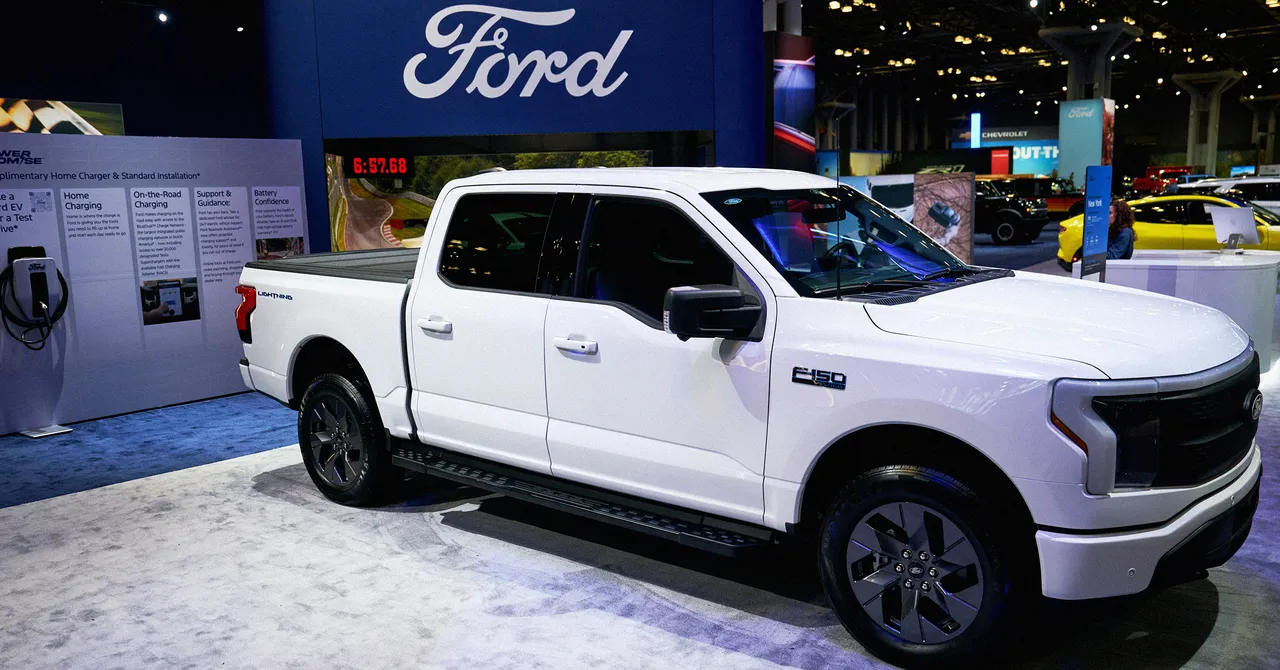
Ford is revising its electric vehicle production strategy, responding to a challenging year marked by declining government support and waning consumer interest in the technology. Rather than aiming for electric vehicles to make up 40% of global sales by 2030—as they committed to four years ago—Ford is now shifting focus to a broader mix of hybrids, extended-range electrics, and battery-electric models. Executives say these will represent 50% of sales by the end of the decade, with hybrid versions of nearly every vehicle in their lineup.
During a press briefing on Monday, Ford officials announced they will no longer produce a large all-electric truck and will instead repurpose an electric vehicle factory in Tennessee to manufacture gas-powered cars. The new generation of Ford’s all-electric F-150 Lightning will become an Extended-Range Electric Vehicle (EREV), which combines an electric motor for driving with a smaller gasoline engine to recharge the battery. Ford claims this technology, viewed as a middle ground between fully electric and gas-powered vehicles, will enhance towing capacity and achieve a range of over 700 miles.
Ford is still planning to launch a midsize electric pickup with an estimated starting price of around $30,000, slated for 2027. This truck will mark the debut of its “affordable” electric vehicle line currently being developed in a California innovation center, designed with a “universal” platform that aims to cut production costs.
These new directions leave Ford with excess battery production capacity, which the company intends to leverage by launching a new business focused on battery energy storage. This venture will create cost-effective and long-lasting Lithium Iron Phosphate (LFP) batteries for public utility and data center clients.
“Ford is responding to customer needs,” stated Andrew Frick, president of Ford Blue and Ford Model e, the divisions handling gas and electric vehicles. He noted that U.S. electric vehicle adoption has not progressed as anticipated at the decade’s start, with battery-electric vehicles currently comprising about 7.5% of new car sales. Frick highlighted regulatory shifts, including the previous administration’s reduction of tax incentives for electric vehicles, as contributing factors.
Additionally, Ford has scrapped plans for an all-electric commercial van aimed at the European market. Instead, the company will collaborate with Renault to develop at least two small electric vehicles under the Ford brand for Europe—a strategic move that CEO Jim Farley described as essential for competing against affordable EVs from China. On the North American front, Ford also announced plans to produce a new gas-powered commercial van.