
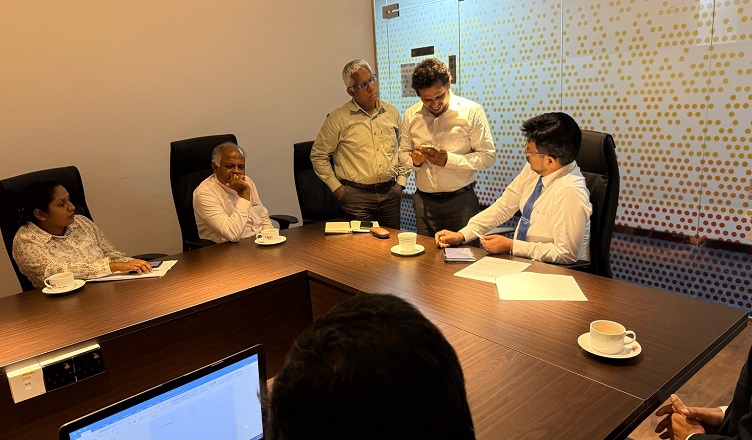
Colombo, April 30 — Aligning with the country’s aim to create an inclusive and technologically advanced society, the Ministry of Digital Economy organized a detailed dialogue led by Hon. (Eng.) Eranga Weeraratne, Deputy Minister of Digital Economy, along with members from the Ministry’s Advisory Committee such as Hon. Sugath Wasantha de Silva, M.P., and prominent participants. The meeting aimed to tackle significant obstacles encountered by individuals with disabilities when trying to access digital services within Sri Lanka.
In Sri Lanka, where more than 1.6 million people have disabilities—of whom 57% are women—the Ministry acknowledges the critical necessity of developing Digital Public Infrastructure (DPI) that is both inclusive and responsive to various types of disabilities. At present, merely 29% of those with differing abilities hold jobs, leaving an overwhelming 71% unengaged professionally and frequently reliant on others for their basic needs. Notably, out of these, approximately 0.99 million face visual impairments, encountering specific difficulties when engaging with technology due to inaccessible interfaces. To address this issue, visually impaired individuals necessitate features like improved auditory assistance and user-friendly navigational aids; thus, incorporating such elements becomes essential during the development phase of digital services.
In the course of the conversation, various key issues confronting the disabled community came to light. Even though earlier governmental directives advised that official sites should cater to everyone’s needs, a majority of government-run online portals continue to pose navigation difficulties for people with disabilities. Furthermore, there is a notable absence of biometric technologies in communal areas designed to address both physical and mental variations, which complicates access to vital services for numerous individuals.
Moreover, despite numerous ATMs being fitted with accessibility features designed for people with disabilities, their uptake and publicity remain low, resulting in significant portions of this group remaining uninformed about or incapable of utilizing these resources. Adding to these difficulties, voice assistant technologies are scarce in communal areas, which hampers independence and ease of movement for individuals relying on such aids.
Recognizing the significance of these challenges, the Ministry of Digital Economy has initiated various programs focused on enhancing support for people with differing abilities. A key measure involves standardizing the websites of governmental ministries and institutions through the use of Unicode and inclusive design guidelines, ensuring accessibility across all platforms for individuals irrespective of their capabilities. This initiative aims to make public information and services more readily available to those facing visual, hearing, or physical impairments.
Simultaneously, the Ministry is diligently endeavoring to generate substantial job prospects for people with disabilities by incorporating them into Sri Lanka’s expanding digital sector. By implementing targeted skill-development programs and utilizing Digital Public Infrastructure (DPI), the Ministry intends to enable those without work to make productive contributions to the economy, thereby promoting increased self-sufficiency and respect.
As Sri Lanka’s digital sector progresses, the Ministry of Digital Economy strongly holds the view that an genuinely sophisticated digital country ensures equal advancement for all its residents. They remain steadfastly dedicated to making sure every individual stays connected with this growth. Rather than being viewed as an afterthought, inclusion stands as a core tenet driving their initiatives towards establishing a fully inclusive and fair digital environment across the nation.


