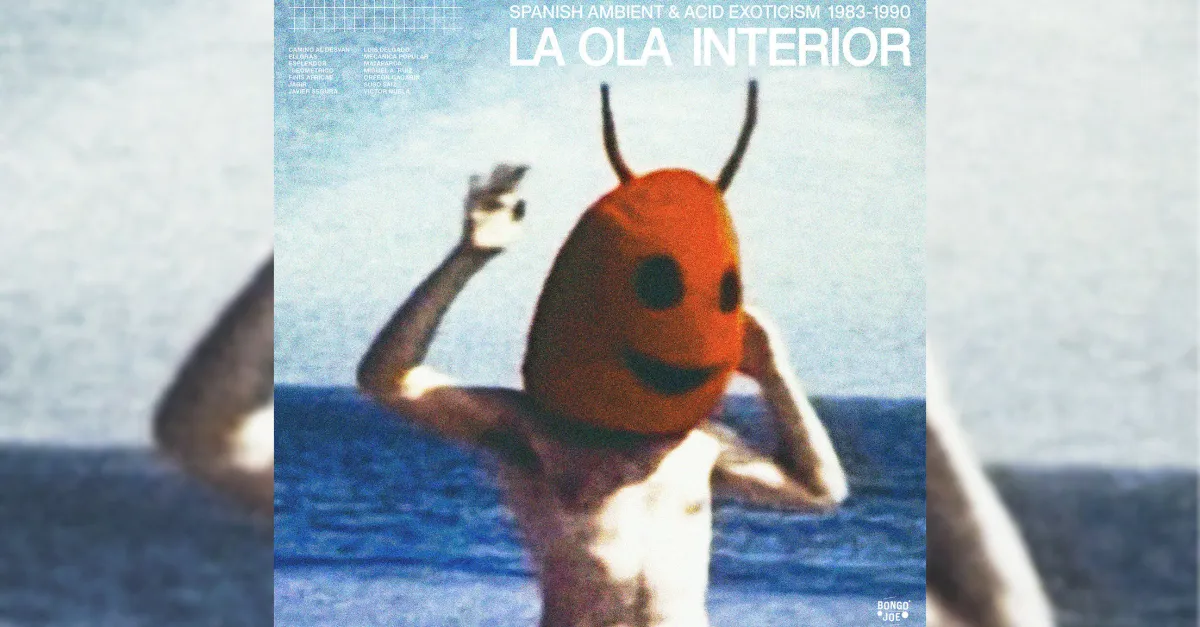
Much of La Ola Interior (Spanish Ambient & Acid Exoticism 1983-1990) feels surprisingly modern, especially considering it features tracks recorded in the mid to late ’80s. By this time, ambient music was already finding its footing, but as the century approached its close, many artists in the US and Japan were veering into New Age sounds. In contrast, the musicians from Spain were diving into more experimental waters.
La Ola Interior showcases a wide range of styles. You’ll encounter despondent drones, classic analog synth explorations, detached vocal chants, field recordings, and even some tracks with a more rhythmic drive. What ties everything together is a clear DIY ethos and an insistence on capturing your focus.
While ambient music often aims to blend into the background—Brian Eno famously noted it “must be as ignorable as it is interesting,” many tracks in La Ola Interior invite attentive listening. The ambient quality here comes from its entrancing textures and repetitive elements, rather than a desire to be ignored.
The album kicks off with Miguel A. Ruiz’s “Transparent,” built around a brief loop that resembles a piano, enveloped in aliased noise that hints at a low-bitrate sampler. What develops feels reminiscent of William Basinski’s Disintegration Loops, as the mournful loop gradually thickens, layering up to a dense crescendo before an abrupt cut.
Next up is Camino al Desván’s “La Contorsión de Pollo,” which sounds like Tangerine Dream slowed down. Then, Finis Africae’s “Hybla” takes a Krautrock twist, combining Spanish and Arabic folk rhythms into something both catchy and rhythmic—perfectly paired with the drum-less Kraftwerk vibe in Orfeón Gagarin’s “Última instancia.” Javier Segura’s “Malagueñas 2” leans towards a more orchestral and almost epic sound, embodying an unresolved hero’s journey in a sonic format.
Several artists appear multiple times throughout the compilation, offering insight into their roles in this diverse, loosely knit scene. You can sense which artists draw from traditional music (like Finis Africae), those influenced by American minimalist composers (like Segura), and those whose styles are hard to pin down (like Ruiz). The common thread is their shared pursuit of sonic exploration.
Compilations like La Ola Interior are essential for highlighting the lesser-known works by artists who are often overlooked by American audiences. The label Les Disques Bongo Joe regularly releases similar collections and is definitely worth checking out on Bandcamp.