We outline the obstacles to ultra-rapid electric vehicle charging in the United States, covering aspects ranging from battery technology to charging connectors and more.
China’s electric carmakers are
outclassing their Western competition
It has become so common that it barely qualifies as news anymore. However, their technological dominance reached such heights recently that even those who aren’t typically interested in cars couldn’t help but take notice.
BYD, China’s top producer of electric vehicles, revealed something one might refer to as the
el dorado of electric vehicle technology
A vehicle capable of charging almost as rapidly as you would refuel with gasoline.
Hefty
tariffs on Chinese automobiles
Implying that affordable BYD vehicles won’t be available in America shortly, we began pondering what it would require for such technological advancements to reach the U.S. market. Indeed, electric vehicle owners would appreciate charge points faster than today’s typical range of 15 to 40 minutes.
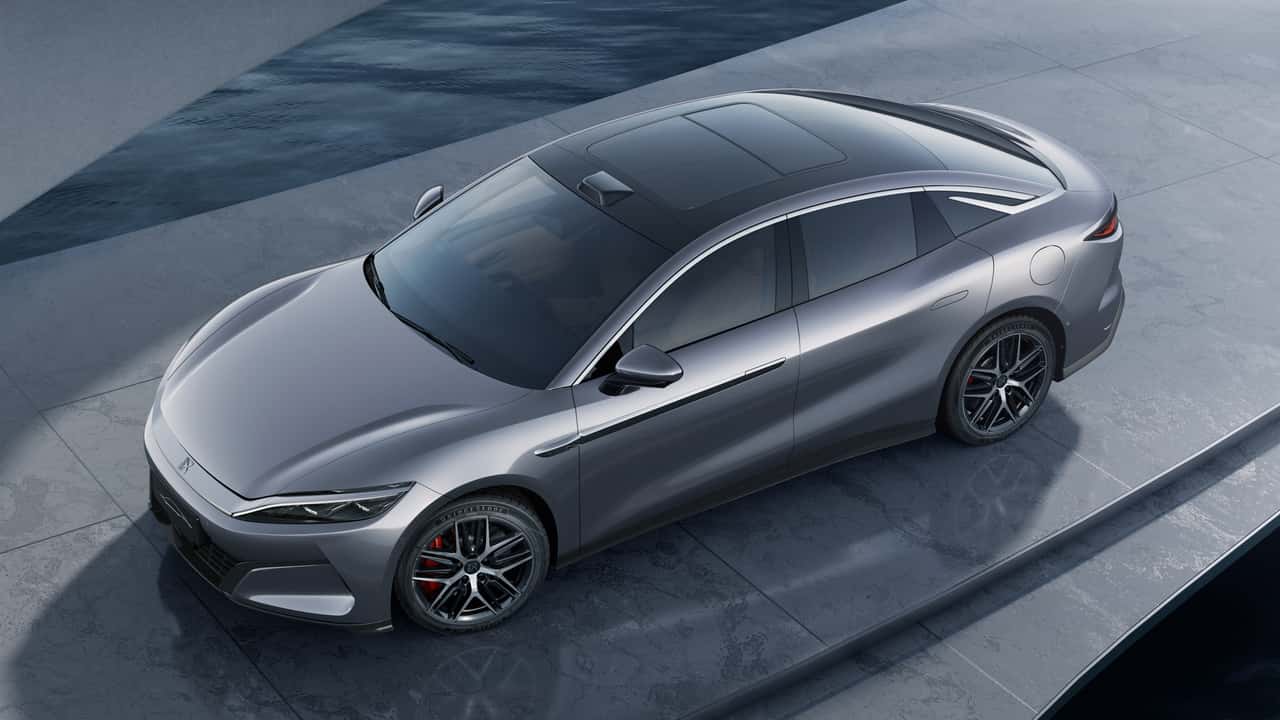

The BYD Han L, as shown here, along with the Tang L, introduce the manufacturer’s latest Super e-Platform and megawatt charging technology.
The primary elements involved are the vehicles and the required charging facilities. We should examine what needs to occur within these domains to facilitate the widespread adoption of ultra-rapid, high-capacity charging across the United States.
BYD’s Big Charging News
What BYD unveiled primarily focused on vehicle technology rather than introducing a more advanced type of electric vehicle charger. Therefore, if competing car manufacturers aim to achieve similar capabilities, they will have to fundamentally redesign their vehicles.
BYD’s new
“Super e-Platform”
launches with the Han L sedan and Tang L SUV.
became available for purchase this week
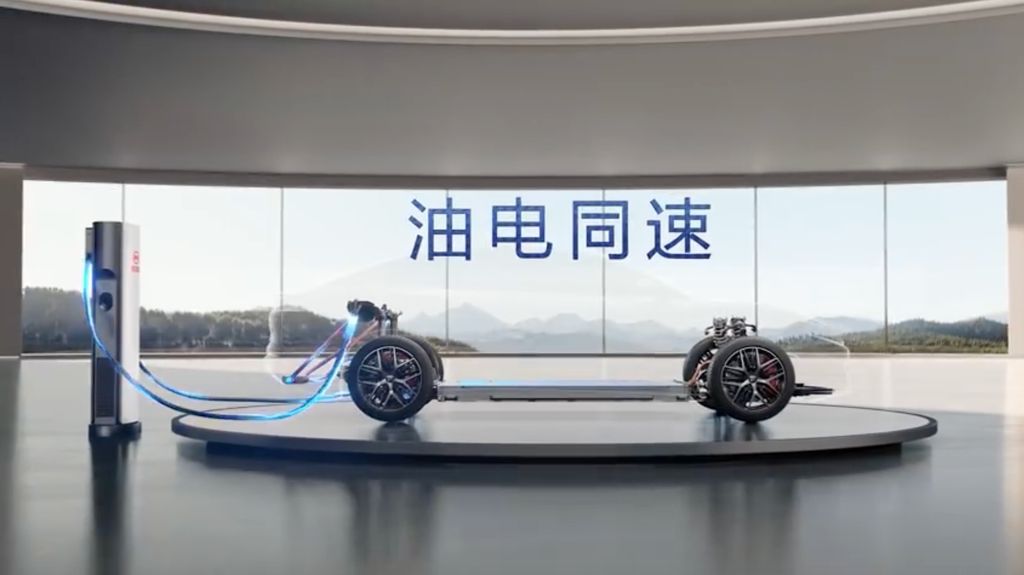
The most striking assertion it makes is that it can add 400 kilometers (250 miles) of range with only five minutes of charging. If we adjust this number to consider the potential overestimation common in Chinese electric vehicle range claims, even then,
more realistic EPA testing
, we’re talking about roughly 165 miles—that still blows away the competition.
Tesla says its
new Model Y
can add 169 miles of range in 15 minutes of charging. So the BYD notches charging times that are about three times quicker. The kicker: The Han L costs about the same as the Model Y in China.
The Cars
So what’s BYD’s edge? It starts at the core of any EV: the battery. BYD has made strides that other manufacturers would need to emulate in order to achieve similar levels of performance.
If you try to force an excessive amount of power into a battery cell not designed for it, you’ll experience severe consequences, according to Bryan McCloskey, a chemical engineering professor with expertise in batteries at the University of California, Berkeley.

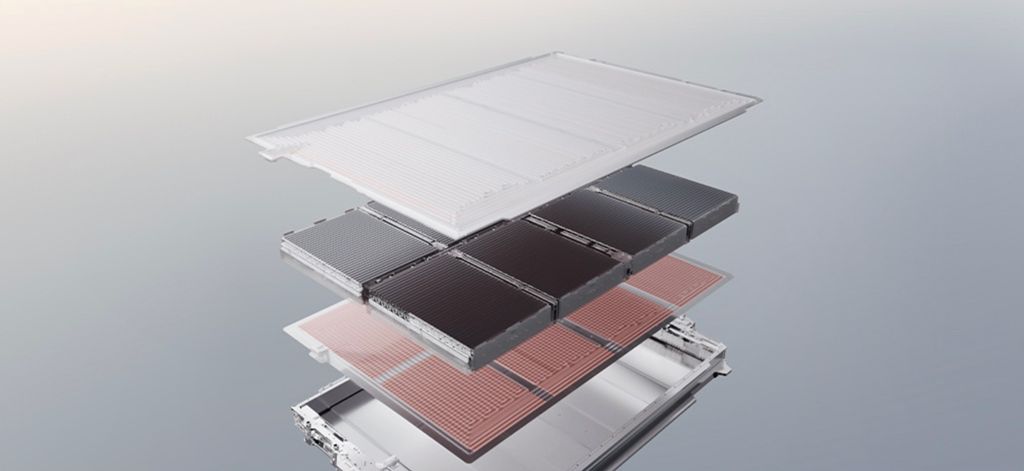
If the lithium ions in a cell move too quickly from a battery’s positive electrode to its negative one—that’s the process of charging—metal deposits can build up over time in a process called lithium plating. Too-fast charging can also create excess heat. Both outcomes can spur unwanted reactions within a cell, degrade its energy capacity over time and, in the worst case, lead to catastrophic failure.
However, with its newest “Blade” battery, BYD claims to have reduced the internal resistance within its cells, enabling ions to move more easily. It also appears they’ve successfully addressed the heating problem at both the individual cell and overall pack levels.
“I believe there’s no doubt this represents a significant breakthrough,” McCloskey stated, noting that the five-minute recharge showcased by BYD, which boosted the Han L’s battery level by approximately 60%, is “extremely remarkable.” Nevertheless, he expressed interest in observing how durable these batteries prove to be after multiple cycles of charging and whether any significant issues arise over time.
More EV Charging News
- ChargePoint Might Be About to Boost Your Home Charging Speeds by Up to Twice as Fast
- Lectron’s Tesla Supercharger Adapter May Be In Big Trouble
Another important caveat: Generally speaking, you can make a battery that packs a ton of energy or charges crazy fast—but not both. So the lithium-iron-phosphate cells BYD developed probably can’t contain nearly as much energy nor deliver as much range as batteries from rivals. That helps explain why the Han L offers the EPA equivalent of under 300 miles of range, which is fine but not great.
BYD also needed an electrical system that could handle the same monstrous power as its battery. That’s why the Super e-Platform is rated for a whopping 1,000 kilowatts, 1,000 volts and 1,000 amps.
In EVs,
more kilowatts equals faster charging
. The Model Y can support a peak charging power of 250 kW. The
Lucid Gravity
, now America’s fastest-charging EV, can
absorb an impressive 400 kW
BYD has manufactured the initial electric vehicle for passengers capable of accepting 1,000 kW, also referred to as one megawatt.

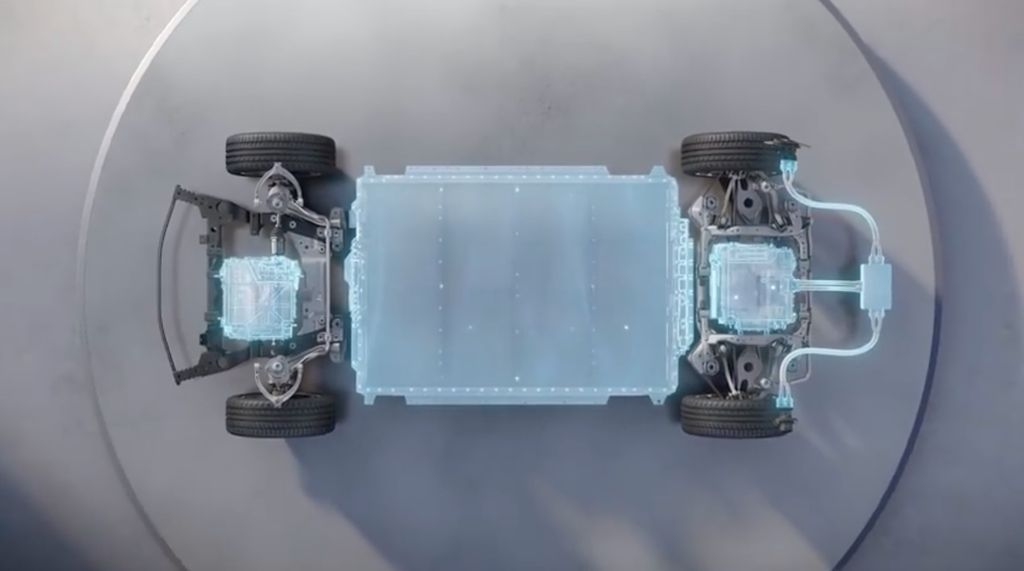
The 1,000-volt electric system plays a crucial role in increasing the kilowatt output, which BYD claims as an innovative feature. According to the principles of physics, using a high voltage allows for greater charging power input with minimal increases in current—or amperage—keeping overheating at bay. Overheating is known to impede rapid charging efforts. By managing this balance effectively, they aim to significantly enhance charging rates without causing excessive thermal issues.
Why then don’t all automobile companies produce 1,000-volt electric vehicles? While they are progressing towards this and aiming for quicker public charging solutions, it’s not a simple task.
Vehicles like the
Hyundai Ioniq 5
,
Porsche Macan Electric
and
Tesla Cybertruck
feature 800-volt electrical systems. The Gravity takes this a step further with a 926-volt architecture. However, 400-volt systems have long been the norm in the automotive industry. Many of these parts are readily accessible to car manufacturers.
are intended for use with 400-volt systems
Moreover, developing and engineering new systems escalates the cost of production.

To grasp why this advancement in vehicle technology occurred in China rather than the U.S., it’s important to acknowledge how much more progressed China’s electric vehicle market is in nearly all aspects. The Chinese government has played a significant role in this development.
has invested hundreds of billions of dollars
To transform its automotive sector into a global leader, China has seen tremendous consumer interest along with fierce rivalry among electric vehicle makers. As a result, companies like BYD and their competitors are highly motivated to produce groundbreaking innovations to maintain their edge.
“Much of this innovation is driven by frequent announcements from companies like Huawei, Zeekr, or XPeng occurring every six or seven weeks,” explained Tu Le, the managing director at consultancy firm Sino Auto Insights. He mentioned some leading Chinese electric vehicle brands as examples. “In North America, who is challenging Tesla?”
The Charging
Currently, vehicles pose one limitation for implementing megawatt charging in America. Additionally, we would require new, high-power electric vehicle charging stations akin to those introduced by BYD with their Super e-Platform.
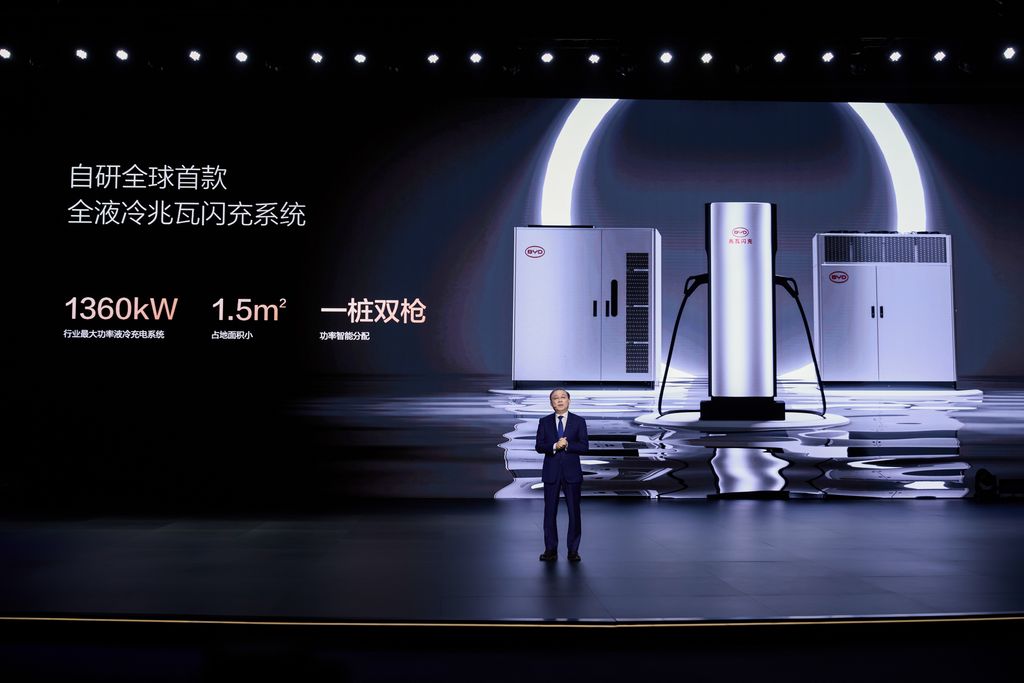
The car manufacturer unveiled a 1,360-kW charger and announced plans to install 4,000 units throughout China. This model features dual cables designed for connection to both charging ports of the Han L or Tang L models, allowing for peak charging efficiency. Additionally, BYD states that using two regular chargers concurrently will double the charging rate.

Most
DC fast chargers
in the U.S. are rated for 150-350 kW. But charging industry executives told
InsideEVs
there’s not much standing in the way of megawatt chargers in the U.S. apart from a lack of demand.
“On the infrastructure side, we can get there,”
said Andrew Cornelia
, CEO of Mercedes-Benz High-Power Charging, which operates 400-kW plugs at its stations.
Companies like Tesla have already been developing megawatt chargers for heavy-duty electric trucks, which have enormous batteries and need extremely high-powered charging to reduce downtime. Kempower, a charging hardware manufacturer, is working on a
1.2-MW charging unit
for electric semis.
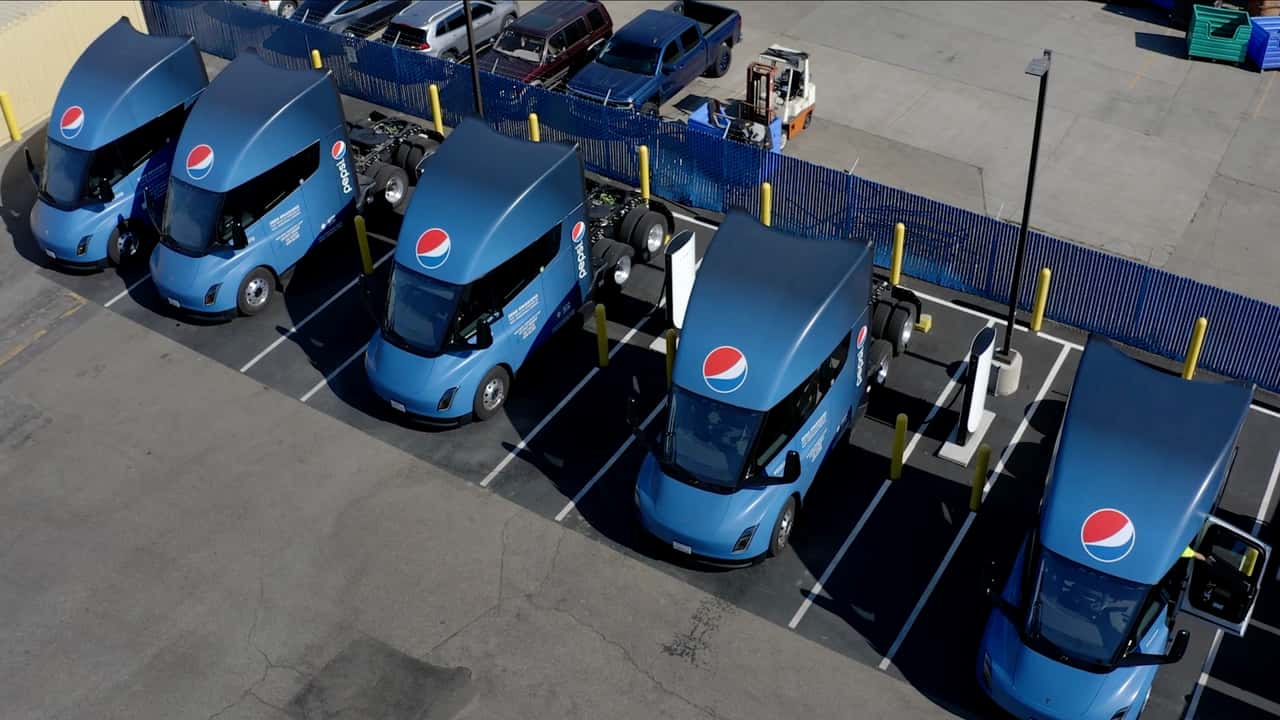
Megawatt charging is already in development in the U.S. for electric trucks like the Tesla Semi.
Our objective has always been more about exploring possibilities rather than aiming specifically to recharge a vehicle within 10 minutes,” stated Jed Routh, Kempower’s vice president of markets and products for North America. “Technically, it could certainly be done if the vehicles were capable of handling such rapid charging.
Setting up megawatt charging stations might necessitate costly and lengthy power grid enhancements in some regions. This is already the case.
hindering the implementation of charging stations for electric trucks in California
BYD stated that large stationary batteries, commonly referred to as microgrids, will assist in reinforcing the power grid at certain sites.
CarNewsChina
.
Therefore, five-minute, megawatt charging is possible in the United States. However, is this capability really needed? Certain specialists and leaders within the electric vehicle industry question its necessity.
aren’t convinced
Cornelia referred to BYD’s declaration as a “turning point,” however, he mentioned that most refueling station stops typically last between 10 and 12 minutes.
“That’s essentially the figure we’re aiming to determine,” he stated. “Is it necessary to charge within five minutes? Probably not.”
Furthermore, BYD’s statement created quite a stir in America, a market where they don’t actually sell vehicles. It’s challenging to imagine that rival car companies wouldn’t envy such publicity—particularly in a region where automobile purchasers are motivated by desire rather than necessity.
Got a tip about the EV or charging world? Contact the author:
Tim.Levin@InsideEVs.com
More EV Charging News
- This EV Battery Charges In 10 Minutes At Sub-Zero Temperatures
- The New Hyundai Nexo Shows Hyundai Is Serious About Hydrogen
- 2025 Audi RS E-Tron GT Review: Quicker in Every Way Possible
- Two Additional Chinese Firms Declare ‘Mega Watt’ Electric Vehicle Charging Initiatives
- The 2025 Ford F-150 Lightning Has Marginally Improved DC Fast-Charging Capabilities
- 2024 BMW iX Long-Term Test: Insights Gained From Charging Hiccups