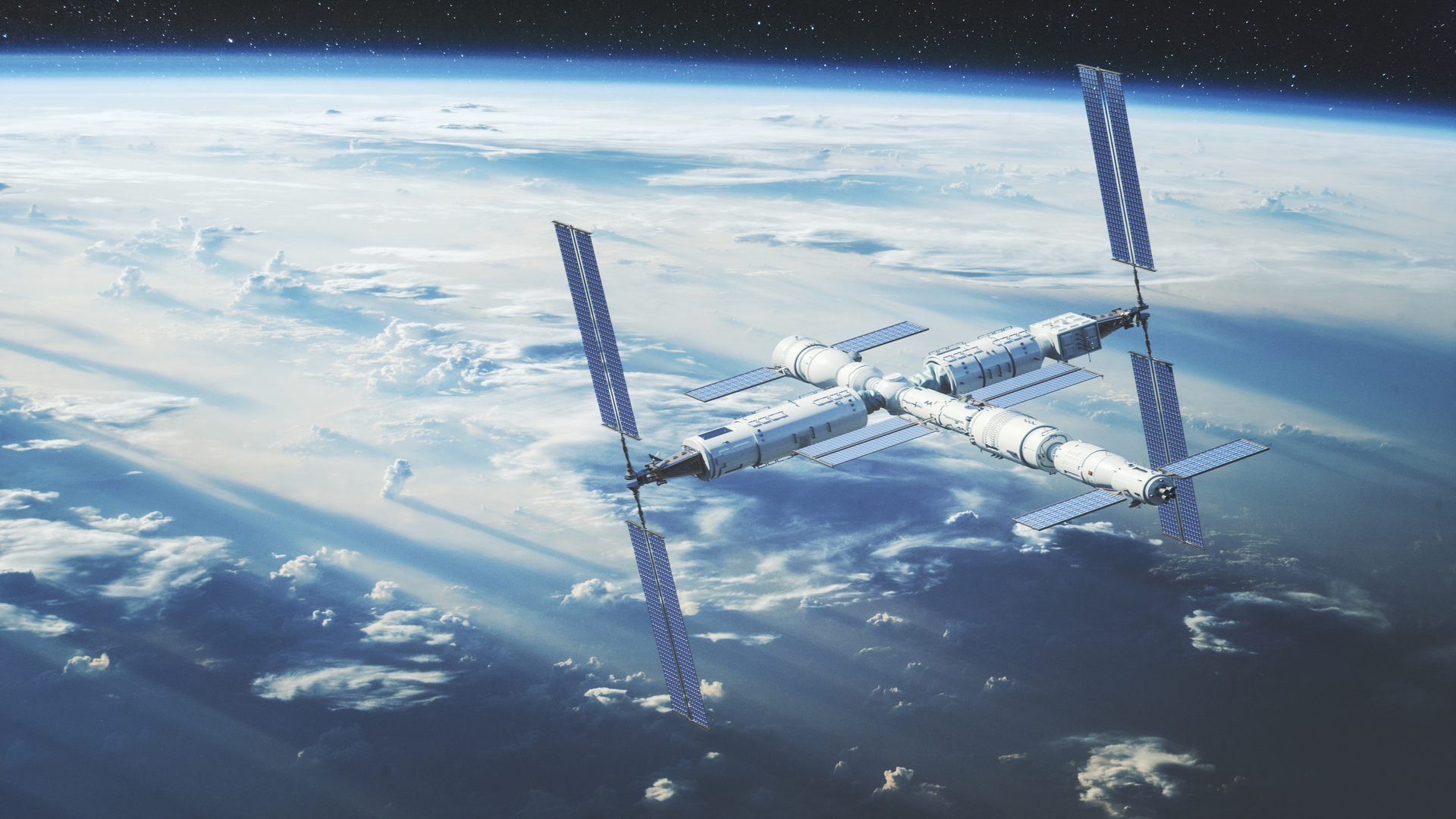
Chinese scientists have discovered a new bacterial strain aboard the Tiangong space station, the first of its kind found in China’s orbital lab. The strain, named
Niallia tiangongensis
, is a new variant of a known Earth bacteria and was discovered on a cabin inside the space station.
Researchers from the Shenzhou Space Biotechnology Group and the Beijing Institute of Spacecraft System Engineering announced the discovery of the new bacterial strain in the
International Journal of Systems and Evolutionary Microbiology
.
Significance of studying microbes in space travel
The research highlighted that grasping the traits of microorganisms over extended space journeys is crucial for safeguarding astronauts’ well-being and ensuring the functionality of spacecraft systems.
South China Morning Post
reported
.
The study revealed that this novel strain possesses distinct ways of adjusting to harsh conditions in outer space, which could have practical uses on Earth. This organism demonstrated improved capabilities in fighting oxidative stress—a condition causing cellular and tissue harm—and healing injuries caused by radiation exposure.
Gaining insight into how this strain manages to survive in space might assist researchers in formulating precise methods for managing microorganisms. This knowledge could have possible uses in areas such as aerospace engineering, farming, and medical treatments. The China Manned Space Agency observed that
Tiangong’s
Research would result in an “abundant bounty” of discoveries about microbial activity, genetics, and metabolism, which could lead to novel applications in everyday life.
The agency announced in a social media post that this finding was made as part of the China Space Station Habitation Area Microbiome Program (CHAMP). This program tracks shifts in microbes throughout long-duration space missions. The microorganism was gathered in May 2023 when the Shenzhou-15 team was present at the facility.
A newly discovered space microbe could aid in transforming waste into useful resources.
The Shenzhou-15 team stayed at the space station for half a year, gathering microbes from various sections’ surfaces with sterilized wipes. The collected specimens were preserved in freezing conditions before being returned to our planet. Upon their return, experts studied these samples through genomic sequencing and metabolic examination, which resulted in identifying a novel bacterial strain.
As Chinese media reports, the discovery offers two key insights. First, understanding how the microbe survives in space could lead to precise microbial control strategies, aiding the design of interventions in the fields of spacecraft, agriculture, industry, and medicine. Second, the microbe’s ability to break down specific organic compounds points to new, sustainable ways of converting waste into valuable resources, both in space and on Earth.
Microorganisms endure the challenging circumstances aboard space stations—such as microgravity, radiation, and isolation—which studying might enhance our comprehension of extraterrestrial life. Even though these settings are severe, microbes exhibit remarkable toughness, durability, and capability to flourish.
Ongoing
missions
The crew aboard Tiangong are anticipated to generate a plethora of new genetic and metabolic insights. These discoveries derived from the space station’s distinctive setting might enhance our comprehension of microorganisms and possibly result in novel applications and contributions to environmental sustainability.