On November 30, 2022, OpenAI unveiled a new product, describing it simply as “a model called ChatGPT which interacts in a conversational way.”
It’s safe to say that ChatGPT has significantly transformed both the business and tech landscapes, skyrocketing in popularity. It continues to hold the top spot in Apple’s free app rankings even today, while also sparking a wave of generative AI products.
Interestingly, it’s even made some question the use of the em dash, which I refuse to give up.
Karen Hao, author of “Empire of AI,” recently stated in an interview with TechCrunch that OpenAI has “already grown more powerful than pretty much any nation-state in the world,” and is now “rewiring our geopolitics, all of our lives.”
We could see even more dramatic changes ahead. Charlie Warzel observed in The Atlantic that we are currently living in “the world ChatGPT built,” one characterized by a certain type of uncertainty and “perpetually waiting for a shoe to drop.”
“Young generations feel this instability acutely as they prepare to graduate into a workforce where there may be no predictable career path,” Warzel noted. “Older generations are also cautioned that the future might be unrecognizable, and the skills they’ve acquired may not be relevant.”
Of course, some people are optimistic about an AI-driven future and are already positioned to profit from it significantly. However, in Warzel’s view, both AI advocates and investors are anxiously waiting to see if their investments will pay off, as generative AI is viewed by its proponents as always evolving and never in its final form.
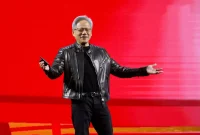
Meanwhile, Bloomberg examined how ChatGPT has impacted the stock market. The clear winner thus far has been Nvidia, with its stock soaring 979% since the chatbot’s launch. AI enthusiasm has also bolstered other major tech firms, with the seven most valuable companies on the S&P 500—Nvidia, Microsoft, Apple, Alphabet, Amazon, Meta, and Broadcom—all contributing to nearly half of the index’s 64% growth since ChatGPT emerged.
This shift has created a more lopsided market. The S&P 500 is weighted based on market capitalization, and these seven companies now represent 35% of that weighting, up from about 20% three years ago.
But how long will this growth continue? Outside of Nvidia’s CEO Jensen Huang, many AI leaders are starting to suggest that the current situation might resemble a bubble (or, if you prefer, a “mania”).
“Someone is going to lose a phenomenal amount of money in AI,” OpenAI CEO Sam Altman remarked in August during a dinner with journalists.
Similarly, Sierra CEO and OpenAI board chair Bret Taylor agreed we are indeed “in a bubble,” likening it to the dot-com boom of the late ‘90s. While some companies may falter, he anticipates that “AI will transform the economy, creating immense economic value in the future, much like the internet.”
In the next three years—if not sooner—we may discover whether that optimism is justified.